



Keeping a steady production line running forms the core of every factory setup. With energy prices shifting often and grid dependability changing, picking the proper solar setup becomes a vital choice. This overview looks at the main distinctions between hybrid and off-grid arrangements to aid in safeguarding your plant’s long-term operations.
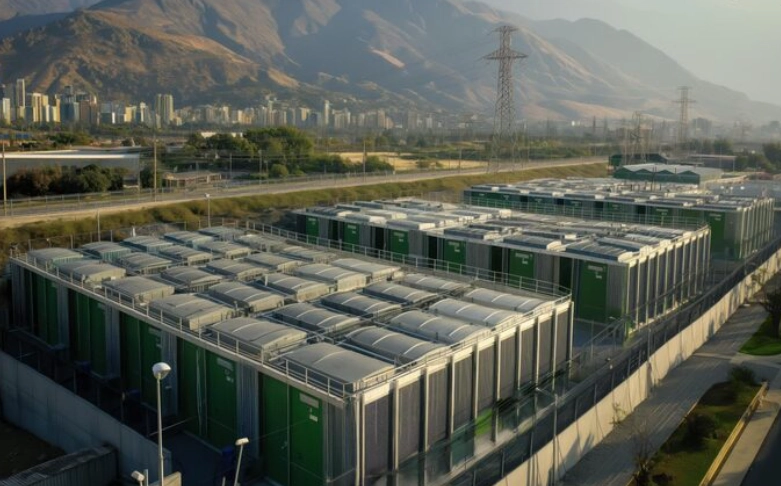
Prior to examining the details, note that WonVolt has played a key role in renewables since 2016. Boasting a solid 1.2GW solar panel output and 2.5GWh lithium battery manufacturing, they focus on complete Industrial and Commercial Energy Storage System (ICESS) options. Their specialists conduct on-site reviews to guarantee each plan fits exact client needs in over 90 nations. Whether seeking modern N-type TOPCON panels or liquid-cooling battery setups, their knowledge in soluciones industriales y comerciales makes the move to sustainable power smooth and expertly handled.
Definition and Core Advantages of Industrial Hybrid Solar Systems
A hybrid solar arrangement combines photovoltaic panels, battery units, and a link to the utility grid. In contrast to a fully off-grid design that functions alone, a hybrid setup enables energy flow in both directions, which means it draws from solar sources, stored power, or the grid at the same time, thus forming a robust backup layer for your equipment.
Seamless Grid-Tie and Battery Integration
The hybrid inverter serves as the central controller for the plant by handling various power sources. It applies Maximum Power Point Tracking (MPPT) methods to adjust PV panel voltage on the spot, so that it gathers the maximum energy under different sunlight levels. This integration ensures smooth operation across all inputs.
Optimized Energy Self-Consumption Efficiency
Storing surplus solar power produced in daylight hours lets you run the production line at night or during overcast periods. As a result, this cuts dependence on costly outside power and makes sure every kilowatt-hour from your panels gets used effectively. Such efficiency boosts overall savings.
Enhanced Power Reliability for Industrial Loads
Factory loads typically demand strong startup currents and steady voltage levels. A hybrid design treats the grid as a reliable base and reserve, which avoids the failures that might happen in off-grid systems when batteries run low or heavy machinery activates suddenly. This reliability supports uninterrupted work.
Superior Power Stability for Continuous Production Lines
The top worry for factory overseers remains operational pauses. A brief voltage drop can force precise CNC tools or robotic lines to restart, resulting in lost resources and idle workers. A hybrid setup delivers electrical firmness that off-grid options find hard to achieve.
Instantaneous UPS-Level Backup Switching
If the grid cuts out, the hybrid arrangement shifts to battery supply in mere milliseconds. This quick change keeps most factory gear operating without breaks, functioning much like a large Uninterruptible Power Supply (UPS) for the whole structure. Such speed prevents any disruption.
Buffer Against Grid Voltage Fluctuations
Utility grids frequently face dips, surges, or interference that harm sensitive circuits. The battery and inverter components work as filters, which clean the power input and supply a stable sine wave to your manufacturing tools. This buffering enhances equipment protection.
Elimination of Costly Machine Downtime
Offering a spare power option removes the weak spots found in grid-only or off-grid-only designs. Consequently, this safeguard keeps your output timeline steady despite outside network problems or utility work. It directly cuts financial losses from halts.
Strategic Cost Management through Peak Shaving Technology
Power bills depend not only on total usage but also on timing and peak rates. Providers often add steep fees for the highest consumption point in a billing cycle.
Reduction of Expensive Grid Demand Charges
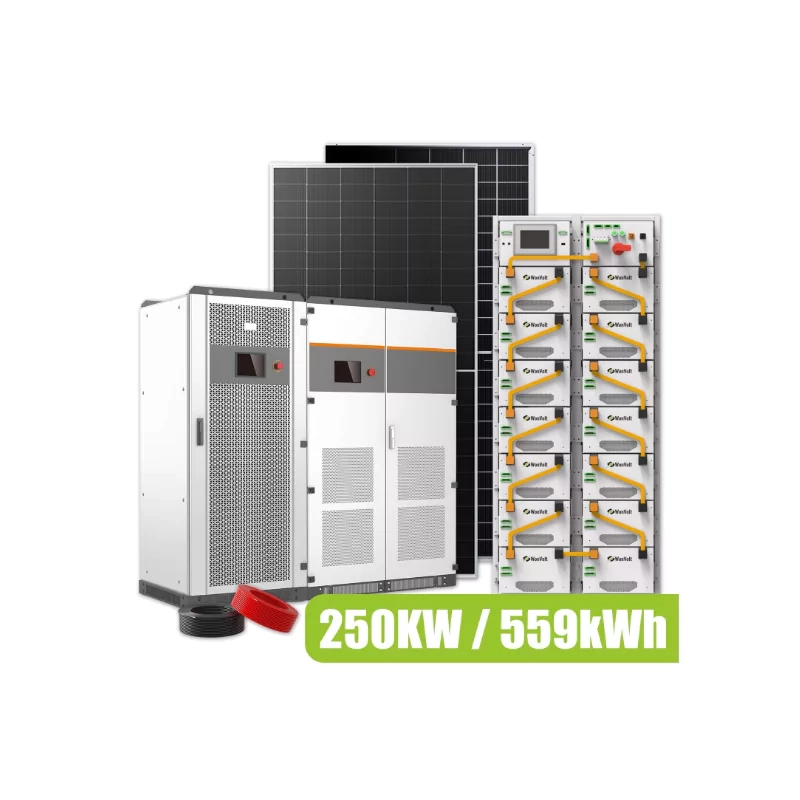
El 150KW – Sistema de energía solar híbrida 500KW targets these expenses directly. By releasing stored battery energy during peak factory activity, it levels off grid draws, which lowers utility costs each month. This approach yields clear savings.
Utilization of Stored Solar Energy at Night
Factories commonly operate round-the-clock shifts. A hybrid design shifts low-cost daytime solar capture to evening high-rate periods, so the night crew runs on sunlight instead of pricier grid supply. This timing optimizes expenses.
Accelerated Return on Investment for Factories
Lower peak fees combined with fewer energy buys speed up system recovery. When adding the savings from avoided halts, the case for a large hybrid setup grows strong for current businesses. It strengthens financial outcomes.
Scalable Energy Storage for Growing Industrial Demands
Current power requirements may differ from those in a few years. Off-grid systems often resist easy growth after setup, but hybrid industrial ones emphasize flexible building blocks.
Flexible 55.3kWh to 100kWh Battery Expansion
Mid-sized plants can begin with a Sistema de energía solar híbrida 50kW 55.3kWh-100kWh. This configuration permits adding battery units as output expands, matching your budget now while allowing later upgrades. It supports ongoing adaptation.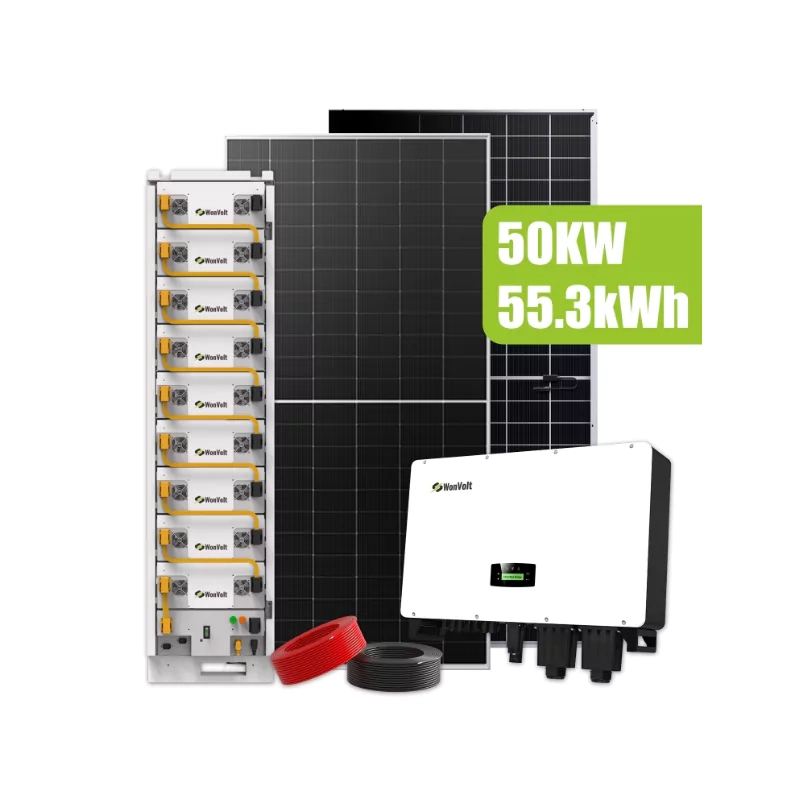
Modular Design of WonVolt 150kW-500kW Systems
In major projects, the modular structure avoids full shutdowns for upkeep. Specific battery shelves or inverters can receive service as the main system keeps powering the site. This design aids reliability.
Future-Proof Infrastructure for Capacity Increases
As machinery grows or shifts to electric transport occur, power setups must evolve. A hybrid framework offers a base that links with fresh sources or bigger storage without overhauling the electrical area. It prepares for expansion.
Advanced Safety Standards in Commercial Energy Storage
Safety tops priorities for big battery installs near production areas. Current designs use refined materials and heat control to keep dense energy from posing dangers.
High-Stability LiFePO4 Battery Chemistry
Lithium Iron Phosphate (LiFePO4) sets the safety benchmark in the field. Unlike certain lithium types, it features a high runaway heat point and extended cycles, which makes it ideal for heavy daily industrial use. This choice ensures long-term dependability.
Intelligent Liquid and Air Cooling Systems
Heat control proves crucial for battery endurance. Smart cooling in hybrid setups holds ideal temperatures, which stops wear from intense factory warmth. It promotes sustained performance.
Comprehensive Remote Monitoring and Maintenance
Cloud platforms let you follow system stats remotely. Tracking State of Charge (SOC), battery condition, and output via phone or desk allows early fixes before small problems escalate. This oversight maintains peak function.
Partner with WonVolt for Tailored Clean Energy Solutions
Selecting a solar ally matters as much as the gear. A skilled supplier delivers beyond parts; they provide the design assurance needed for nonstop renewable-powered operations.
Global Expertise from 8-Year Industry Leader
Proven background counts in handling intricate factory networks. Partnering with a firm active in over 90 countries guarantees compliance with regional rules and resilience to varied climates. It builds confidence in the setup.
Professional Pre-Sale and Post-Sale Engineering Support
From starting site checks to final tests and team training, full backing remains essential. Specialists adjust the system to your load patterns for best results. This service ensures smooth integration.
Direct Contact Information for Customized Quotations
To protect your line with a strong hybrid design, contact for advice at the Hefei base on No. 678 Changjiang West Rd. Expert input starts the path to power self-reliance and steady runs.
Preguntas frecuentes
Q1: Why is a hybrid system better than an off-grid system for a factory?
A: A hybrid system uses the grid as a backup, ensuring your production never stops even if the batteries are low or solar generation is weak, whereas an off-grid system has no safety net if demand exceeds storage.
Q2: Can I expand my 100kWh battery system later?
A: Yes, these systems are designed with modularity, allowing you to add more battery capacity as your production facility grows or as your energy storage needs increase.
Q3: How long does the transition to battery power take during a blackout?
A: The switching time is typically measured in milliseconds (UPS-level), which is fast enough to keep most industrial machinery and computers running without a reboot.
Q4: What is the lifespan of the batteries in these systems?
A: By using high-quality LiFePO4 chemistry and intelligent cooling, these batteries are designed for thousands of cycles, often lasting over ten years with proper maintenance.