



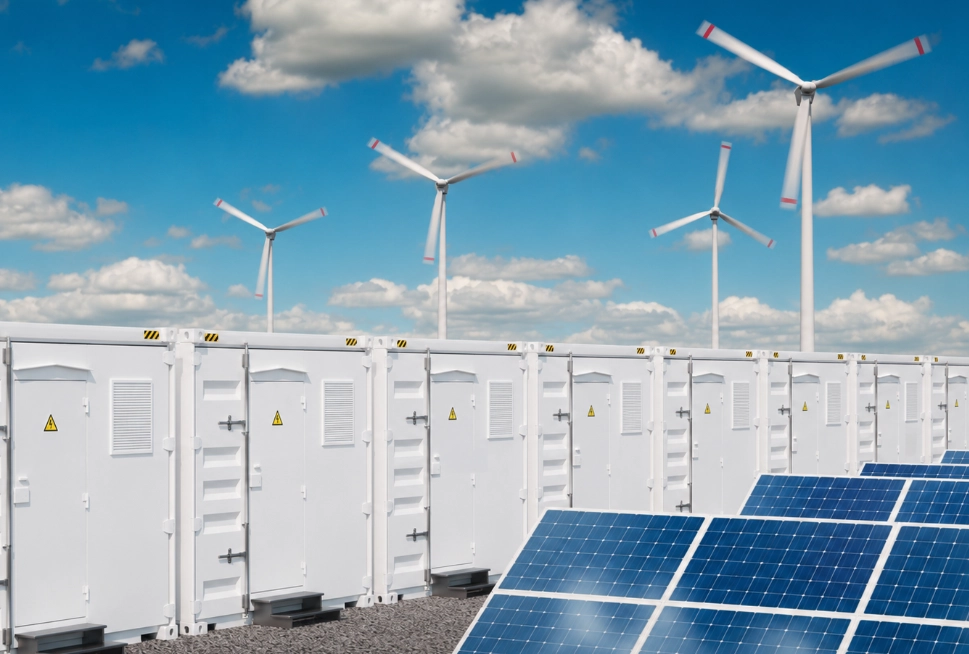
Die Abregelung von Strom ist einer der kostspieligsten versteckten Verluste großer Solarkraftwerke. Selbst bei optimalen Wetterbedingungen, hocheffizienten Modulen und einem vollständig angeschlossenen Netz kann ein Teil des erzeugten Stroms nicht eingespeist werden. Gründe hierfür können Netzengpässe, geringe Nachfrage oder strenge Regelungsgrenzen sein. Solar-Plus-Speicher-Systeme kehren diese Situation tagsüber, wenn die Sonneneinstrahlung am höchsten ist, um und wandeln den überschüssigen Strom in bedarfsgerechten Strom um, der zu einem späteren Zeitpunkt ins Netz eingespeist werden kann. So wird nicht nur die tagsüber bei hoher Solarstromerzeugung produzierte Energie nicht verschwendet, sondern das System trägt auch zur Netzstabilität bei und steigert den Gesamtertrag des Kraftwerks.
Warum kommt es in großen Solarkraftwerken zu Leistungsdrosselungen?
Die Abregelung von Solarstrom ist nicht nur ein Problem der Solaranlage selbst, sondern auch der Systemkoordination. Eine große Photovoltaikanlage muss die Netzkapazität, den lokalen Bedarf, die Spannungsgrenzen, die Frequenzregeln, die Wechselrichterleistung und die Betriebsanweisungen berücksichtigen. Steigt die Solarstromerzeugung schneller als die Aufnahmekapazität des Netzes, kann die Anlage angewiesen werden, ihre Produktion zu reduzieren.
Die Solarstromerzeugung deckt nicht immer den Netzbedarf.
Photovoltaikmodule wandeln Sonnenlicht in Gleichstrom um, daher steigt die Stromerzeugung naturgemäß um die Mittagszeit und sinkt gegen Abend. Wenn der lokale Strombedarf später am Tag seinen Höhepunkt erreicht, kann eine große Anlage zu viel Strom produzieren, wenn das Netz ihn am wenigsten benötigt. Ohne Speichermöglichkeiten bleibt dann möglicherweise nur die Möglichkeit, die Wechselrichterleistung zu begrenzen.
Die Netzkapazität kann zum Engpass werden
Selbst bei optimaler Modulleistung kann die Exportkapazität durch Transformatoren, Umspannwerke, Übertragungsleitungen oder lokale Netzvorschriften begrenzt sein. In schnell wachsenden Märkten für erneuerbare Energien sehen sich Projektbetreiber häufig mit Wartezeiten am Netzanschluss oder Teilexportbeschränkungen konfrontiert. Speicherlösungen ermöglichen es, einen Teil der Energie außerhalb der Spitzenzeiten zu exportieren und so den Druck am Netzanschlusspunkt zu reduzieren.
Leistungsschwankungen erhöhen das Dispatch-Risiko
Wolkenbewegungen, Temperaturänderungen und plötzliche Lastschwankungen können die PV-Leistung instabil machen. Netzbetreiber achten neben der jährlichen Gesamterzeugung auch auf vorhersehbare Leistungskurven. Eine Solaranlage mit Speicher kann die Leistung glätten, die Anstiegsgeschwindigkeit steuern und Strafzahlungen aufgrund instabiler Lieferungen reduzieren.
Wie reduziert Solarenergie in Kombination mit Speichern Energieverschwendung?
Ein Speichersystem bietet Ihrer Solaranlage einen zweiten Weg für die Stromerzeugung. Der erzeugte Strom muss nicht mehr sofort exportiert werden. Er kann in Batterien geladen, von einem Energiemanagementsystem (EMS) verwaltet, über einen Stromwandler (PCS) umgewandelt und bei Bedarf ins Netz eingespeist oder vom Abnehmer genutzt werden.
Mittagsüberschüsse für den späteren Export einlagern
Wenn die Solarstromproduktion die Exportgrenzen überschreitet, lädt das Batteriespeichersystem (BESS) Strom auf, anstatt dass die Anlage Energie abregelt. Später, während des Abendbedarfs oder in Zeiten höherer Stromtarife, gibt das System den gespeicherten Strom ab. Dies verbessert die Auslastung der installierten PV-Leistung und trägt dazu bei, Wert aus Strom zu gewinnen, der sonst verloren ginge.
Gleichmäßige Leistung für bessere Netzakzeptanz
Energiespeicher können schnelle Leistungsschwankungen, verursacht durch vorüberziehende Wolken oder plötzliche Wechselrichter-Anpassungen, reduzieren. Das Energiemanagementsystem (EMS) überwacht den Anlagenbetrieb und sendet Betriebsbefehle, während das Leistungsumwandlungssystem (PCS) das Laden und Entladen steuert. Dies trägt zu einer gleichmäßigeren Leistungskurve bei, was sowohl für netznahe Projekte als auch für Solarkraftwerke im Versorgungsmaßstab wichtig ist.
Verbesserung der Absorption und Rampensteuerung
Für die Stromspeicherung auf Erzeugungsseite sind die Schlüsselfunktionen die Glättung der Leistung, die Verbesserung der Absorption und die Rampensteuerung. Diese Funktionen tragen direkt zur Lösung des Abregelproblems bei. Das Kraftwerk kann lokal mehr Solarenergie aufnehmen, diese gemäß einer geplanten Kurve abgeben und so das Risiko einer erzwungenen Leistungsreduzierung verringern.
Was sollten Sie überprüfen, bevor Sie ein Batteriespeichersystem in eine Solaranlage integrieren?
Ein BESS-Projekt sollte nicht allein auf der Batteriekapazität basieren. Es müssen der gesamte Stromkreis, die Betriebsstrategie, die Standortumgebung, das Sicherheitssystem und die Langzeitdegradation geprüft werden. Eine gute Planung reduziert Abschaltvorgänge, ohne neue Betriebsrisiken zu schaffen.
Passen Sie die Speichergröße an die Sparmuster an.
Sie sollten die bisherigen Exportgrenzen, die Solarstromerzeugungskurven, die Netzlastdaten und die Tariffenster überprüfen. Bei kurzen Abschaltungen während der Mittagszeit kann eine moderate Speicherdauer ausreichen. Blockiert das Netz den Export jedoch häufig über längere Zeiträume, ist möglicherweise ein größeres, containerisiertes Batteriespeichersystem erforderlich.
PCS- und Wechselrichterkoordination prüfen
Das PCS (Power Control Module) ist für die bidirektionale Leistungsumwandlung zuständig. Es muss sicheres Laden, stabiles Entladen und eine schnelle Reaktion auf EMS-Befehle (Energy Management System) gewährleisten. Auf der WonVolt-Seite für Großkraftwerke finden Sie passende bidirektionale PCS-Produkte von 100 kW bis 630 kW, die Ihnen helfen, die Speicherleistung optimal auf den Einsatzplan Ihres Kraftwerks abzustimmen.
Schützen Sie die Akkulaufzeit durch gute Betriebsregeln
Die Batterielebensdauer hängt von der Anzahl der Ladezyklen, dem Entladegrad, der Temperatur, dem Ladestrom und der Qualität des Batteriemanagements ab. Tiefentladung, hohe Temperaturen und aggressive Ladezyklen können die nutzbare Lebensdauer verkürzen. Ein optimal konfiguriertes Batteriemanagementsystem (BMS) überwacht Spannung, Stromstärke und Temperatur, während das Energiemanagementsystem (EMS) optimierte Lade- und Entladestrategien festlegt.
Warum ist die Modulwahl immer noch wichtig?
Speicher reduzieren zwar die Abregelung, können aber eine schwache PV-Erzeugung nicht ausgleichen. Zuverlässige Module, eine stabile elektrische Anlage und eine gute Langzeitleistung sind weiterhin erforderlich. In großen Anlagen kann jede noch so kleine Effizienzsteigerung Auswirkungen auf die Flächennutzung, die Kabelauslegung, die Wechselrichterlast und die Wirtschaftlichkeit der Speicher haben.
Nutzen Sie hocheffiziente Module für einen besseren Grundstückswert
Für Kraftwerke bietet WonVolt mit dem bifazialen Modul WV-66KUN einen Leistungsbereich von 630 W bis 660 W und einen Modulwirkungsgrad von bis zu 24,3 %. Das Modul verfügt über Doppelglas, eine IP68-Anschlussdose, einen Rahmen aus eloxierter Aluminiumlegierung und ist für eine Systemspannung von 1500 V ausgelegt. Diese Details sind entscheidend für die Planung großer PV-Anlagen und eine lange Lebensdauer.
Entscheiden Sie sich für die N-Typ-Technologie für langfristige Erträge.
Die N-Typ-TOPCon-Technologie bietet einen hohen Wirkungsgrad, geringe Degradation im ersten Jahr, gutes Hochtemperaturverhalten und eine verbesserte Reaktion bei schwachem Licht. In großen Solaranlagen trägt dies zur Steigerung der täglich nutzbaren Stromerzeugung bei. In Kombination mit Speichern ermöglicht der höhere Modulertrag dem Batteriespeichersystem (BESS) die Bereitstellung von mehr Energie in nutzungsintensiven Perioden.
Berücksichtigen Sie den bifazialen Gewinn an offenen Standorten
Bifaziale Module können von geeigneten Bodenoberflächen reflektiertes Licht auf der Rückseite auffangen. Die Daten von WonVolt zeigen, dass sich durch die rückseitige Lichtstreuung Leistungssteigerungen von 5 % bis 25 % erzielen lassen. An offenen Standorten kann dies bei geeigneter Bodenbeschaffenheit, Montagehöhe und Albedo-Bedingungen zu einer höheren Energieausbeute führen.
Wie unterstützt WonVolt Solarkraftwerksprojekte mit Speichersystemen im Versorgungsmaßstab?
WonVolt wurde 2016 gegründet und betreibt zwei Werke in Hefei, China. Das Unternehmen ist seit über acht Jahren auf industrielle und kommerzielle Energiespeicherlösungen spezialisiert und verfügt über eine Solarmodulkapazität von 1,2 GW und eine Lithiumbatteriekapazität von 2,5 GWh. Das Produktportfolio umfasst PERC-, N-Typ-TOPCon- und HJT-Solarmodule, containerisierte Batteriespeichersysteme (BESS), flüssigkeitsgekühlte und intelligente luftgekühlte Lithiumbatterien sowie Komplettlösungen für saubere Energie.
Wählen Sie eine Lösung im Versorgungsmaßstab für Solaranlagen mit einer Leistung von 1 MW bis 5 MW
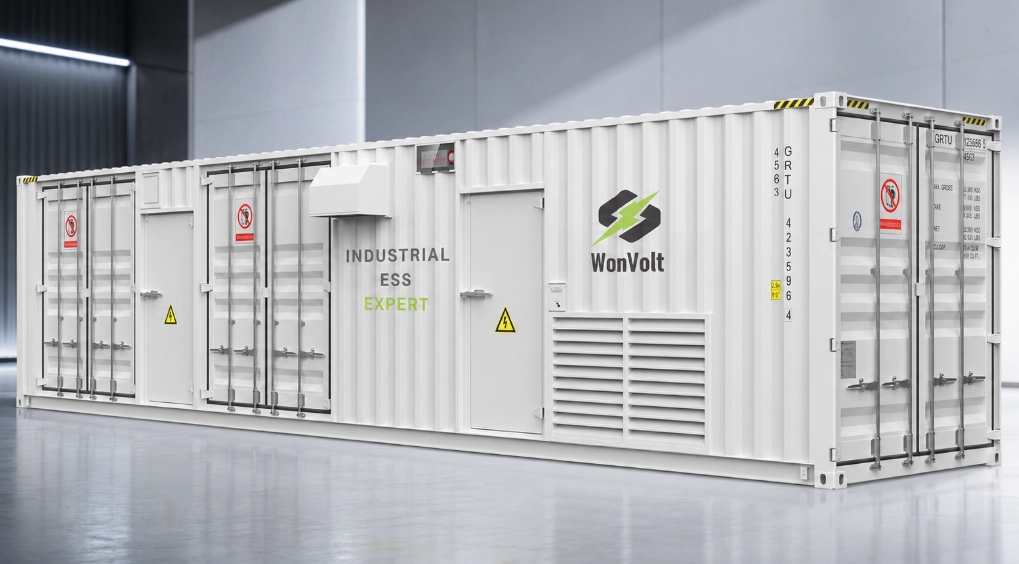
Für große Kraftwerke Utility-Skala-Lösung Das System ist für containerbasierte Energiespeicher für Solaranlagen von 1 MW bis 5 MW konzipiert. Der BESS-Container integriert Batterie, Wechselrichter, Klimaanlage, Sicherheitseinrichtungen und Überwachungssysteme. Diese integrierte Bauweise reduziert die Komplexität der Planung und vereinfacht die Koordination von PV-Leistung, Speicherladung und Netzsteuerung.
Nutzen Sie den PoseidonVolt 2.0 BESS-Container mit bis zu 5 MWh für größere Speicheranforderungen.
Für Projekte, die eine höhere Energiekapazität benötigen, PoseidonVolt 2.0 BESS-Container bis zu 5 MWh Es eignet sich zur Unterstützung großer Solaranlagen, die längere Abschaltfenster bewältigen müssen oder eine stärkere Spitzenlastverschiebung benötigen. Es ist geeignet, wenn Sie mehr Überschussstrom am Mittag speichern, die Netzstützung verbessern und die Abhängigkeit von Abschaltbefehlen verringern möchten.
Sicherheit in die Containerkonstruktion einbauen
Ein Batteriespeichersystem im Kraftwerksmaßstab muss Wärme, elektrische Störungen, Belüftung und Notfälle bewältigen. Die WonVolt-Lösung zeichnet sich durch Rauch- und Temperatursensorik, automatische Brandbekämpfung, Temperaturregelung für längere Lebensdauer, Plug-and-Play-Design, hohe Integration, Abgassystem und umfassende Anpassungsmöglichkeiten aus. Diese Merkmale helfen Ihnen, die Bedenken Ihrer Investoren hinsichtlich Sicherheit und langfristigem Betrieb auszuräumen.
Wie lässt sich die Kontrolle über Produktionsbeschränkungen in einen geschäftlichen Mehrwert umwandeln?
Durch die Reduzierung von Abschaltmaßnahmen geht es nicht nur um die Einsparung verlorener Kilowattstunden. Sie kann das gesamte Projektmodell verändern. Mit Speichern lässt sich Strom zu günstigeren Zeiten verkaufen, die Netzeinspeisungsanforderungen erfüllen, die Netzstabilität schützen und die Finanzierbarkeit des Projekts verbessern.
Energie in höherwertige Stunden verlagern
Durch die Abgabe gespeicherter Energie während der Spitzenlastzeiten kann Ihr Kraftwerk die Qualität seiner Einnahmen verbessern. Dies ist besonders vorteilhaft in Märkten mit zeitabhängigen Tarifen, Kapazitätsgebühren oder Netzdienstleistungen. Anstatt mittags minderwertige Einspeisungen oder Abregelungen hinzunehmen, können Sie Energie in günstigere Zeitfenster verlagern.
Support Grid Services
Ein Batteriespeichersystem (BESS) kann Frequenzregelung, Spitzenlastregelung, Notstromversorgung und Inselbetrieb unterstützen. Verfügt das Energiemanagementsystem (EMS) über eine schnelle Datenerfassung und Reaktionszeit, kann die Anlage von passiver Erzeugung zu aktiver Netzstützung übergehen.
Reduzieren Sie das Konstruktionsrisiko durch technische Unterstützung
WonVolt bietet vor der Planung einen Vor-Ort-Service mit Ingenieuren für die Feldanalyse an, um die optimale Lösung für Ihre Projektanforderungen zu finden. Auch nach dem Kauf steht Ihnen unser Kundendienst für Installation, Inbetriebnahmetests und technische Schulungen zur Verfügung. Für Projektentwickler reduziert diese Unterstützung die Planungsunsicherheit und sorgt dafür, dass das Speichersystem optimal an die Gegebenheiten vor Ort angepasst wird – nicht nur an die Datenblätter.
Für eine umfassendere Planung können Sie auch die vollständige Übersicht einsehen. WonVolt-Lösungsportfolio, vergleichen Sie die industrielle und kommerzielle Lösung mit Bedarf im Versorgungsmaßstab oder Kontakt WonVolt für projektspezifische Dimensionierung.
FAQ (häufig gestellte Fragen)
Frage 1: Wie trägt die Nutzung von Solarenergie in Kombination mit Speichern zur Reduzierung von Abschaltmaßnahmen in großen Kraftwerken bei?
A: Die Anlage speichert überschüssige Solarenergie in Zeiten, in denen das Stromnetz nicht die volle Leistung aufnehmen kann, und gibt diese Energie später wieder ab. Dadurch werden Energieverluste reduziert und eine gleichmäßigere Leistungskurve erzielt.
Frage 2: Ist das Batteriespeichersystem wichtiger als der Wirkungsgrad der Solarmodule?
A: Beides ist wichtig. Hocheffiziente PV-Module erhöhen die verfügbare Stromerzeugung, während Batteriespeichersysteme die Nutzung dieses Stroms verbessern. Ein leistungsschwaches Modulsystem bietet dem Speicher weniger Energie zum Übertragen, und ein leistungsschwaches Speichersystem kann dennoch zu einer Abregelung führen.
Frage 3: Welche Größe sollte das Batteriespeichersystem (BESS) für ein Solarkraftwerk im Versorgungsmaßstab haben?
A: Die optimale Größe hängt von der Dauer der Abschaltmaßnahmen, den Netzeinspeisegrenzen, den Tariffenstern, der angestrebten Entladezeit und der Standortlast ab. Projekte mit langen Einspeisegrenzen benötigen möglicherweise größere Containerspeicher, wie beispielsweise den PoseidonVolt 2.0 BESS Container mit bis zu 5 MWh.
Frage 4: Welche Sicherheitsmerkmale sollten Sie bei einem Batteriespeichersystem im Versorgungsmaßstab überprüfen?
A: Sie sollten Temperaturregelung, Rauch- und Temperaturerfassung, automatische Feuerlöschanlage, Gebäudeleittechnik (BMS), PCS-Koordination, Abgasanlage und Fernüberwachung prüfen. Diese Systeme tragen zur Verlängerung der Batterielebensdauer und zur Sicherheit des Geländes bei.
Frage 5: Kann ein Solarkraftwerk durch Speicherlösungen höhere Einnahmen erzielen?
A: Ja. Speicher können Energie in Zeiten mit höherem Wert verlagern, Abschaltverluste reduzieren, Bedarfsspitzen abfedern und, wo zulässig, Netzdienstleistungen erbringen. Der endgültige Ertrag hängt von lokalen Tarifen, Einsatzregeln, Systemkosten und der Betriebsstrategie ab.