



Da der weltweite Energiebedarf steigt und der Fokus auf Nachhaltigkeit steigt, sind Hybrid-Solarenergiesysteme zu einer Schlüsseloption für zuverlässige und kostengünstige Energie geworden. Diese Einrichtungen kombinieren Solarpanelleistung, Batteriespeicher und intelligente Stromsteuerung, um eine robuste und praktische Energieeinrichtung für Häuser, Unternehmen und Fabriken zu bieten. Der Hybrid-Wechselrichter sitzt im Herzen dieser Technologie und verarbeitet die Energiebewegung zwischen Solarpanelen, dem Netz und den Batterien mit Sorgfalt.
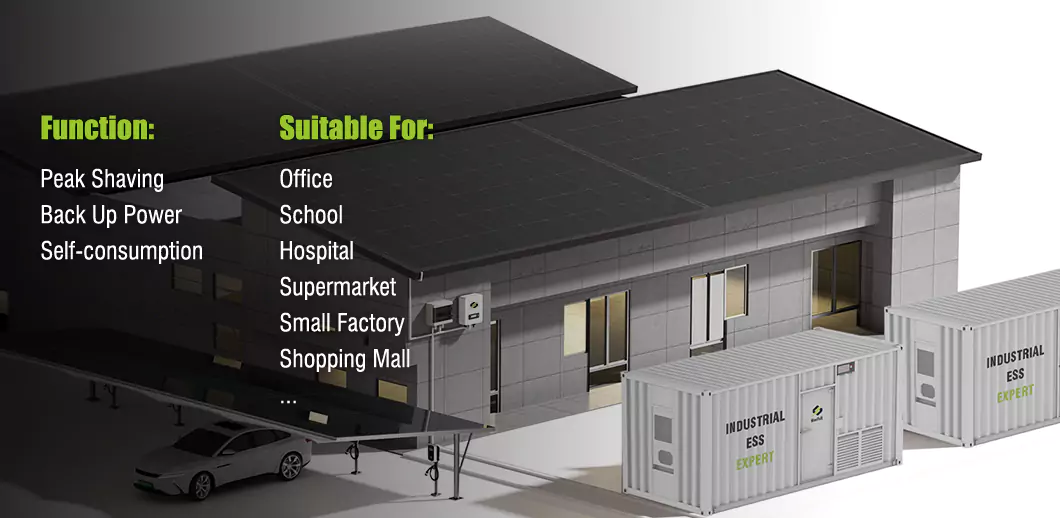
Wenn Sie maßgeschneiderte Optionen benötigen, die Ihren Energiebedarf entsprechen, schauen Sie sich WonVolts Hybrid-Solarsysteme an. Seit 2016, WonVolt hat als weltweiter Anbieter von kompletten sauberen Energiepaketen gearbeitet, einschließlich effizienter Lithiumbatterien, Hybrid-Wechselrichtern und N-Typ-TOPCon-Solarpanelen für eine einfache Einrichtung. Mit einem breiten Supportteam in mehr als 90 Ländern arbeitet WonVolt daran, die Energiestruktur der Welt zu verbessern und unsere Zukunft zu stärken, indem es flexible, erweiterbare und intelligente Energiesysteme für verschiedene Bereiche anbietet.
Übersicht über Hybrid Solar Power Systems
Ein hybrides Solarenergiesystem mischt Funktionen von netzverbindenen und eigenständigen Systemen sowie Batteriespeicher. Diese Mischung ermöglicht es Ihnen, das Beste aus Solarenergie zu machen, zusätzliche Energie zu sparen und die Versorgung bei Ausfällen oder hohen Nachfragezeiten stabil zu halten.
Grundlagen und Architektur
Ein Hybrid-Wechselrichter vereint die Rollen eines Solar-Wechselrichters und eines Batterie-Wechselrichters in einer Einheit. Es verarbeitet also Strom aus Solaranlagen, Speichern und dem Netz. Die Hauptteile eines Hybridsystems sind Photovoltaikpaneele, die Gleichstrom erzeugen, Hybrid-Wechselrichter, die Zweiwegwechsel verwalten, Lithiumbatterien und Netzverbindungen für Strom in und aus.
Der Wechselrichter verwendet einen DC-gekoppelten Ansatz, der den PV-Wechselrichter und den Zweiwegwandler zu einer einzigen PV-Speichereinheit kombiniert. Diese Einrichtung ermöglicht eine AC/DC-Kopplung, die eine flexible Energieverarbeitung unterstützt. Außerdem überwacht ein eingebautes EMS (Energy Management System) die Stromflüsse, um die Lade-, Entladung- und Netzverbindungen in Echtzeit zu verbessern.
Betriebsprinzipien und Energiefluss
Tagsüber geht die Solarenergie zuerst, um den aktuellen Bedarf zu erfüllen. Extra Energie füllt die Batterien durch MPPT (Maximum Power Point Tracking), das die beste Ausgabe erhält und die Gleichspannung auf das richtige Niveau für das Aufladen der Batterie dreht. Wenn die Batterien voll sind, kann der Reststrom ins Netz gehen.
Bei schwacher Sonne oder Nacht kommt gespeicherter Strom heraus, um den lokalen Bedarf zu decken. Noch mehr, wenn die Sonne niedrig ist, kann ein Hybrid-Wechselrichter Strom aus dem Netz ziehen, um Batterien aufzuladen und die Dinge laufen zu halten. Das Netz dient als Backup und stabile Quelle und ermöglicht reibungslose Verschiebungen bei Spannungs- oder Frequenzproblemen.
Vorteile gegenüber herkömmlichen Systemen
Hybridsysteme geben Energiefreiheit, indem Sie Ihre eigene Energie außerhalb der Spitzenzeiten oder während Versorgungsabschnitte nutzen können. Der Hybrid-Wechselrichter balanciert das gesamte Setup intelligent, um es auch bei wechselnden Solareingängen sicher zu halten. Sie profitieren von der Verschiebung der Lasten, die die Rechnungen senkt, indem Sie billigen Strom sparen und ihn in kostspieligen Spitzenperioden verwenden.
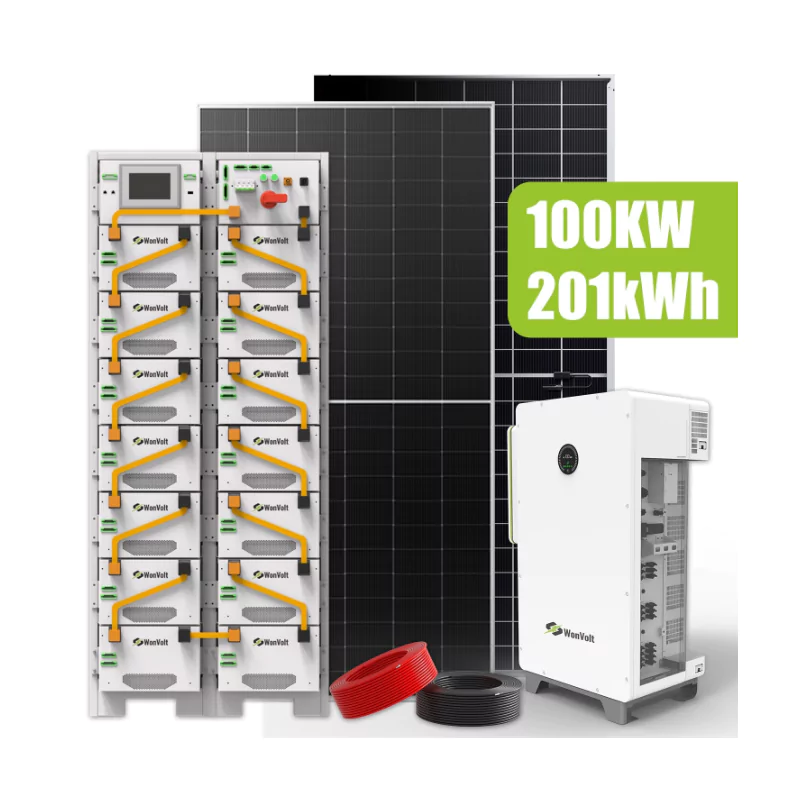
Außerdem halten diese Systeme Schlüssellasten bei Blackouts mit schnellem Umschalten unter 10ms wie im 100kW 201kWh Hybrid Solarenergiesystem.
Überlegungen zur Konstruktion von Wechselrichtern für Hybrid-Solarsysteme
Ein guter Hybrid-Wechselrichter sorgt dafür, dass das System zuverlässig bleibt und sich an sich ändernde Netz- und Lastsituationen anpasst. Dieser Teil betrachtet die wichtigsten Bedürfnisse und Designpunkte.
Hauptfunktionelle Anforderungen an Hybrid-Wechselrichter
Hybrid-Wechselrichter sind eine neue Technologie in der Solarenergie. Sie verbinden die Vorteile von Standard-Wechselrichtern mit Batterieflexibilität. Ein starker Hybrid-Wechselrichter erfordert eine Zweiwegumwandlung für PV-zu-Last (DC zu AC) und Batterieladung/Entladung (AC zu DC). Es muss den Netzregeln für Spannung und Frequenz in Echtzeit entsprechen.
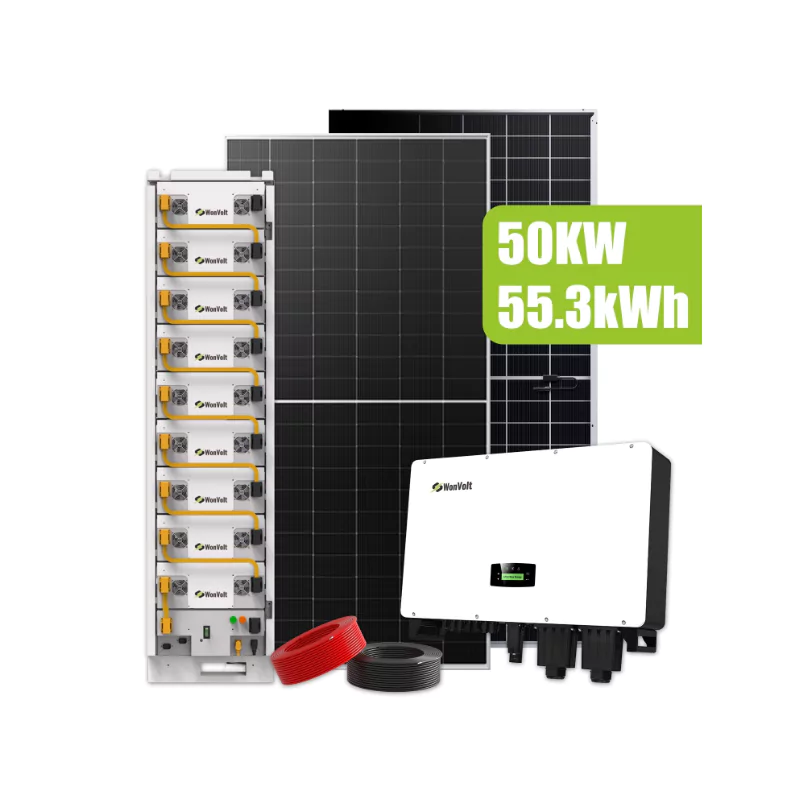
Neuere Systeme verwenden intelligente Lastprioritätsregeln, die sich je nach Nutzungsmuster ändern. Diese halten die Dinge stabil, auch bei großen induktiven Belastungen, wie in WonVolts 50 kW 55,3 kWh-100 kWh Hybrid Solar Power System zu sehen ist.
Spezifikationen für elektrische Leistung
Die Leistung des Wechselrichters zeigt sich in der Änderungseffizienz (oft über 98%), der MPPT-Reihenpassung und der Spannungsversammlung für PV-Module und Batterien. Niedrige Gesamtharmonische Verzerrung (THD) ist von entscheidender Bedeutung für eine gute Leistungsqualität auf empfindlichem Getriebe.
Wärmebehandlung ist ebenfalls wichtig; intelligente Designs verwenden passive oder aktive Kühlung mit IP65-bewerteten Gehäusen für einen dauerhaften Einsatz bei unterschiedlichen Wetterbedingungen.
Integration mit Batteriespeichersystemen
Lithium-Ionen- und LiFePO4-Typen sind für ihre langen Zyklen und Wärmesicherheit führend. Angesichts der Lebensdauer der Batterie, der Kosten, der Sicherheit und der Lade-/Entladungseffizienz passen Lithium-Eisenphosphatbatterien hier gut.
Links zu BMS (Battery Management Systems) verwenden Standardmethoden wie CAN oder RS485. Intelligente Lade-/Entladungspläne verlängern die Lebensdauer des Zyklus durch Festlegung von Entladungstiefengrenzen aus Echtzeitnutzung.
Leistungsparameter, die die Systemeffizienz beeinflussen
Neben der Konstruktion auf Teilebene hängt die Systemeffizienz davon ab, wie Strom unter unterschiedlichen Wetter- und Arbeitsbedingungen verwaltet, geteilt und eingespart wird.
Umwandlungseffizienz und Stromverluste
Wechselrichterverluste treten bei DC-AC-Wechseln und Leerlaufzeiten in der Nacht oder bei geringen Belastungen auf. Hocheffiziente Einheiten reduzieren Leerlaufverluste mit sehr geringem Standby-Einsatz, während Wärmesysteme bei voller Last aufhören, sich zu überhitzen.
Spannungsabfallkurven müssen beachtet werden, insbesondere bei Hitze; sie wirken sich direkt auf die PV-Stromsammelung aus.
Lastmanagement und Demand Response-Fähigkeiten
Gute EMS-Tools prognostizieren Lastwegungen mit Datenprognosen, um Peak Cut-Strategien anzuwenden. Diese umfassen intelligentes Timing für Geräte oder Werksgeräte basierend auf Live-Tarifinformationen oder Netzfrequenzverschiebungen.
Einige Setups schließen sich virtuellen Kraftwerken an, indem sie zusätzliche gespeicherte Strom im Rahmen von Reaktionsverträgen an intelligente Netze senden.
Umweltbeständigkeit und Zuverlässigkeit
Für den Außenbereich blockiert hoher Schutz wie IP65 oder besser Staub, Wasser oder Rost. Der MTBF (Mean Time Between Failures) misst die langfristige Zuverlässigkeit.
Systeme wie Die BESS-Lösungen von WonVolt zusätzliche Kühlung und automatische Brandsteuerung für eine bessere Sicherheit in großen Setups.
Anwendungsszenarien mit WonVolt Hybrid Solar Power Solutions
Hybride Solarenergiesysteme anpassen sich an viele Felder basierend auf Leistungsgröße, selbstständigen Zielen und Regeln.
Industrie & Gewerbliche Anwendungen mit 100kW 201kWh System
Das 100kW-System verbindet starke N-Typ-TOPCon-Solarpaneele mit einem 100kW-Hybrid-Wechselrichter und einem 201kWh-Lithiumbatteriesatz. Es bewältigt reibungslose Ausfallschichten (unter 10ms) und wächst parallel auf 300kW, ideal für schwere Anwendungen wie Anlagen oder Lager. Das eingebaute EMS senkt Spitzenkosten für niedrigere Rechnungen.
Mittelständische Unternehmen mit 50 kW 55,3 kWh–100 kWh System
Mittelständische Orte wie Kliniken oder Schulen profitieren von der 50kW Hybrid SolarenergiesystemEs läuft stetig außerhalb des Netzes, kontrolliert den Export, um Netzstromausfälle zu vermeiden, und fügt Speicher für eine bessere Sicherung bei Schnitten hinzu.
Potenzial für die Bereitstellung von Versorgungsanlagen in Mikronetzprojekten
Große Systeme passen gut zu verteilten Netzen in ländlichen Strom- oder Inselgefällen. Ihre hohe Wechselrichtereffizienz reduziert Verluste über Leitungen und gleichzeitig Lasten in Mikronetzen ausgleichen. Solange es Sonnenschein gibt, kann ein photovoltaisches Off-Grid-Energiespeichersystem installiert und verwendet werden.
Warum wählen Sie WonVolt Hybrid Solar Power Systems?
Engineering Exzellenz im Systemdesign
Dieses Solarspeichersystem verfügt über eine Photovoltaik-Anlage von 12,18 kWp und einen Energiespeicher von 10 kW/25,6 kWh. Flexible Designs ermöglichen es Ihnen, sich ohne große Änderungen an verschiedene Felder anzupassen. MPPT-Methoden erzielen den ganzen Tag über höchste Energieernte, auch im Schatten oder im wechselnden Licht.
Alle Teile erfüllen ISO- und CE-Regeln mit strengen Qualitätskontrollen in jedem Schritt.
Intelligente Steuerung und Überwachung
Cloud-basierte Fernprüfungen senken die Wartungskosten und geben einen klaren Überblick über die Systemarbeit. KI-gestärktes EMS passt sich an die Nutzungsgewohnheiten an und wechselt die Modi automatisch, um Einsparungen zu erhöhen.
Mit Live-Bildschirmen können Sie PV-Ausgang, Batteriezustand, Netzaktion und Ladedetails von jedem verbundenen Gerät verfolgen.
Globales Support-Netzwerk und kundenspezifische Lösungen
Jede von WonVolt entwickelte Lösung ist einzigartig. Vorverkaufsgespräche umfassen Site-Checks für die besten Layout-Pläne. After-Sales-Hilfe umfasst Remote-Startup-Hilfe, technische Schulung und stetige Wartung Das internationale Servicenetzwerk von WonVolt.
FAQ (häufig gestellte Fragen)
Q1: Was ist der Unterschied zwischen einem Hybrid-Wechselrichter und einem traditionellen Solar-Wechselrichter?
A: Ein Hybrid-Wechselrichter kombiniert die Funktionen eines Solar-Wechselrichters und eines Batteriespeicher-Wechselrichters in einem einzigen Gerät.
Q2: Können Hybrid-Solarsysteme ohne Netzverbindung funktionieren?
A: Ja, sie können im Off-Grid-Modus funktionieren, indem sie Strom aus Batterien versorgen, wenn der Solareingang nicht verfügbar ist oder während Ausfälle.
Q3: Welche Arten von Batterien werden in diesen Systemen verwendet?
A: Häufige Batterietypen umfassen Blei-Säure-Batterien, Lithium-Ionen-Batterien und Lithium-Eisenphosphatbatterien.
Q4: Sind diese Systeme für industrielle Anwendungen geeignet?
A: Absolut. Das 100kW 201kWh System ist speziell für anspruchsvolle industrielle Anwendungen wie Fertigungsanlagen oder Logistikzentren konzipiert.