



Factory peak shaving with a bidirectional PCS works when inverter power, battery energy, and control schedules match the site’s demand peaks. A factory that buys too much battery but too little PCS power cannot discharge quickly enough to reduce a short demand spike. A system with large PCS power but a shallow battery may hit its SOC limit before the tariff window ends. The practical design task is to map the load profile, identify peak duration, reserve an operating SOC band, and select equipment that can deliver the required kW repeatedly. This approach reduces demand charges while protecting battery life and keeping production loads stable.
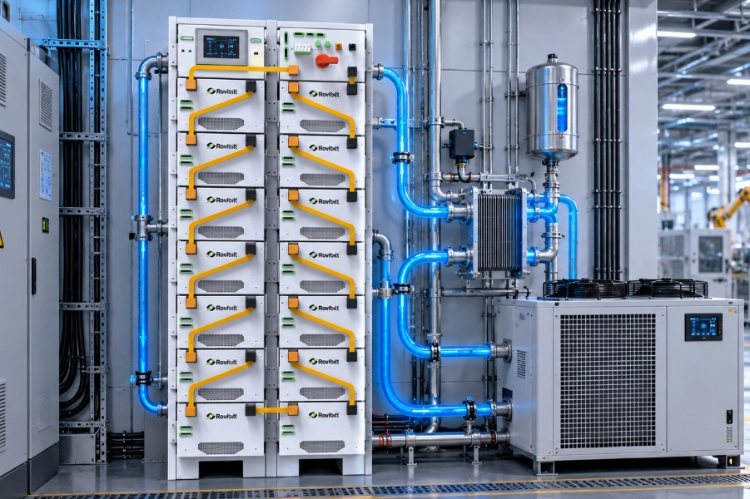
The Power and Energy Problem Behind Peak Shaving
Peak shaving is a power problem first and an energy problem second. The PCS controls the instantaneous charge or discharge rate in kilowatts. The battery determines how long that rate can continue in kilowatt-hours. If a production line creates a 400 kW demand spike for 30 minutes, the minimum ideal energy is 200 kWh before reserve, conversion loss, temperature effects, and SOC limits. The PCS must also cover the 400 kW discharge requirement, with headroom for control response and measurement error.
Read the Load Curve Before You Choose Hardware
Use interval data from the utility meter or an on-site power-quality meter. Fifteen-minute data is a useful starting point, but one-minute measurements reveal short motor starts, compressors, welders, and batch-process surges that can disappear in averaged demand records. Mark the monthly maximum, typical peak duration, number of peaks per day, and minimum load during the tariff window.
Separate Short Spikes from Sustained Peaks
A short spike may need high PCS power and modest energy. A two-hour afternoon peak needs more usable battery energy and a control schedule that avoids early discharge. Do not size from the single highest value if it came from a fault or one-off test. Compare at least three representative production days and check whether the same equipment causes the peak each time.
Convert the Tariff Window into a Dispatch Plan
Set a target grid-import ceiling below the demand-charge threshold, then let the EMS command the PCS to hold import near that ceiling. Leave a reserve SOC for unexpected peaks and backup needs. The design document should state minimum and maximum SOC, trigger delay, ramp rate, and recovery charge period.
How to Match PCS Power to Factory Loads
The PCS should be selected from the load that must be controlled, not from the battery nameplate. A bidirectional inverter must absorb charging power during low-load periods and deliver discharge power during peaks. It also needs compatible voltage, protection, communication, and grid-support functions.
Use Headroom for Motors and Measurement Error
If the target reduction is 300 kW, selecting a PCS rated exactly at 300 kW leaves no margin for sensor error, auxiliary consumption, or a second load starting at the same moment. Confirm a project-specific margin after reviewing the one-minute load trace and the PCS overload curve. Ask for continuous rating, short-duration overload rating, power factor range, and response time in the technical offer.
Choose Architecture for Expansion
A single large PCS can simplify controls and maintenance, while several parallel PCS units provide staged capacity and partial operation when one unit is offline. Parallel operation requires a clear control strategy, matched firmware, selective protection, and a commissioning test for circulating current. For projects that may grow, modular PCS blocks reduce the risk of replacing the entire inverter when production expands.
For a factory evaluating a wide power range, the Inverteur de batterie 100KW-1MW PCS100-1000-US bidirectionnel is a relevant reference product for bidirectional battery power conversion. Confirm final AC voltage, protection scheme, overload profile, communication protocol, and local grid requirements before order release.
Battery Capacity Is a Dispatch Decision
Battery capacity should cover the energy that must be shifted, plus losses and a reserve that prevents operation at the edge of the SOC window. A simple reference calculation is required usable energy = target peak reduction x discharge hours. If the factory needs 250 kW for 1.2 hours, the basic requirement is 300 kWh. The procurement specification must state whether quoted capacity is nominal or usable and under which temperature, C-rate, and end-of-discharge voltage.
Select a Cluster That Can Grow with the Site
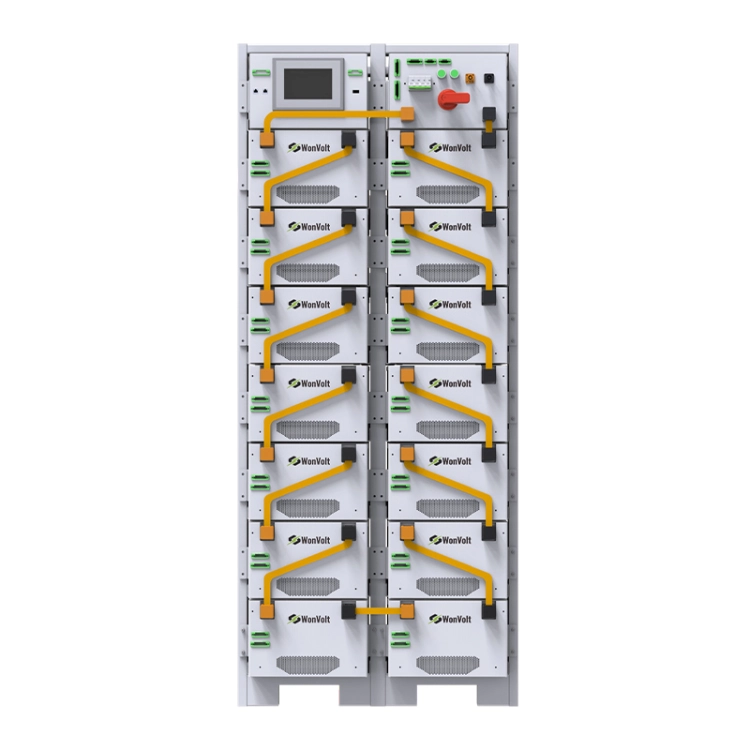
Le 100-261kWh Lithium Battery Cluster can serve as a modular building block for commercial and industrial storage planning. Its listed 51.2 V, 314 Ah configuration provides a starting point for comparing rack count, DC bus design, and usable energy. Verify final module combination, BMS limits, cooling method, enclosure rating, and warranty conditions in the project quotation.
Sizing Reference Table
| Site observation | PCS implication | Battery implication | Check before order |
| Short peaks under 15 minutes | Prioritize kW, response time, overload capability | Moderate usable kWh with reserve | One-minute load trace and sensor latency |
| Peaks lasting 30-120 minutes | Continuous rating must hold target import ceiling | Energy capacity becomes limiting | Usable kWh at stated temperature and SOC |
| Several peaks each day | Confirm recharge power and recovery time | Cycle strategy affects daily throughput | BMS limits, thermal management, warranty |
| Planned production expansion | Use parallel or modular PCS architecture | Leave space and DC design margin | Communication, protection, future rack plan |
Controls, Safety, and Commissioning Details
The EMS should not chase every small fluctuation. A deadband prevents unnecessary cycling, while a ramp limit reduces abrupt changes on the factory bus. Coordinate the PCS with the plant transformer, capacitor banks, generators, and critical-load transfer logic. If a generator starts during a grid event, the EMS must block conflicting charge and discharge commands.
Two Field Checks That Prevent Expensive Rework
First, validate the meter location. A sensor installed downstream of a large process branch may miss the demand used for billing. Compare EMS readings with the revenue meter during a controlled load step. Second, test thermal behavior at the planned C-rate. Battery temperature, HVAC capacity, and cabinet spacing can limit usable power even when the electrical nameplate looks adequate.
WonVolt supports solution-level planning through its solution de stockage d'énergie industrielle et commerciale resources. Prepare the single-line diagram, twelve months of interval demand data, tariff rules, ambient temperature range, fire-safety requirements, and preferred operating reserve.
When Peak Shaving Is Not the Right First Investment
Peak shaving may deliver limited value when demand charges are small, peaks are unpredictable, or the site has no practical charging window. It is also a poor fit if the electrical room cannot meet clearance, ventilation, fire separation, or cable-routing requirements. In those cases, correct the load measurement, improve process scheduling, or evaluate a smaller backup-oriented system before committing to a large battery bank.
A complete design should show the baseline demand curve, expected post-dispatch curve, annual cycles, auxiliary consumption, replacement assumptions, and a sensitivity case for lower-than-expected peak reduction. WonVolt can discuss project documentation and commissioning support through its contact channel.
FAQ (questions fréquentes)
How much battery capacity is needed for a 500 kW factory peak?
Start with duration. A 500 kW peak lasting one hour needs 500 kWh of usable energy before losses and reserve. Confirm duration from interval data, then apply SOC window and efficiency assumptions.
Can a 100 kW PCS reduce a 300 kW demand spike?
It can reduce grid import by about 100 kW within its continuous rating. It cannot remove the full spike unless more PCS capacity is installed or the load is managed in parallel.
What SOC range is suitable for daily peak shaving?
Follow the battery supplier operating limits, temperature conditions, and warranty terms. Keep a defined reserve and avoid dispatching to the absolute minimum SOC during normal operation.
Should a factory use one large PCS or several smaller units?
One unit simplifies coordination. Parallel units improve staging and partial availability but require matched controls, selective protection, and a documented commissioning test.
Which documents should be requested before ordering a bidirectional PCS?
Request the datasheet, efficiency curve, overload profile, grid-code functions, protection settings, communication map, installation clearances, test plan, warranty terms, and single-line diagram.
A Practical Next Step
Collect the load curve first and state the target grid-import ceiling. Then compare PCS power, usable battery energy, SOC reserve, thermal limits, and commissioning scope on the same basis. WonVolt can help turn those inputs into a battery storage architecture that fits the site rather than forcing the site to fit a catalog rating.