



Large solar power plants no longer depend only on module output and inverter capacity. For many EPC buyers, the harder question is how to keep renewable power stable, useful, and financially practical after generation. A BESS container can help store excess solar energy, smooth output fluctuation, support grid dispatch, and reduce curtailment risk. But not every containerized energy storage system fits every site. Before you choose a supplier or model, you need to check capacity, battery chemistry, PCS performance, safety design, installation work, and long term service.
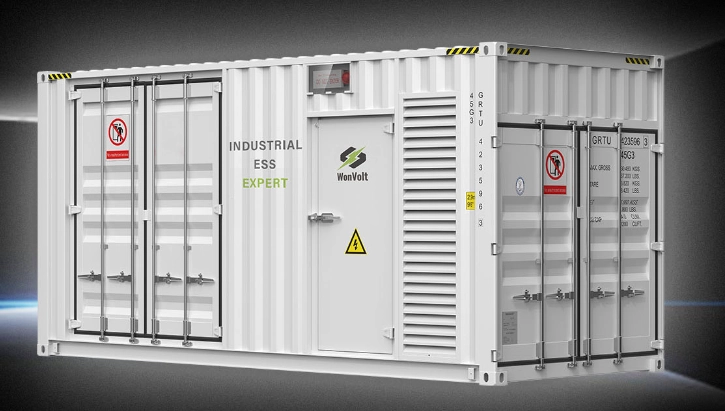
Why Should Capacity Come Before Price?
Price matters, but a low initial price can create expensive problems later. If the BESS container is too small, it cannot absorb enough solar output during high generation hours. If it is too large, your project may carry unnecessary battery cost, land cost, transport cost, and maintenance pressure.
Check MW and MWh Together
EPC buyers often compare BESS containers by energy capacity, but MW and MWh must be checked together. MW tells you how fast the system can charge or discharge. MWh tells you how much energy it can store. For a solar plant, you should match both values with the plant size, grid connection limits, expected discharge duration, and local power price pattern.
For example, a short duration system may support output smoothing or grid response. A longer duration system may help store midday solar power and release it during evening peak demand. If your project needs grid support, the PCS and EMS must also respond fast enough, not just store energy.
Leave Space for Future Expansion
Large solar plants often grow in phases. EPC buyers should choose a modular BESS container design that can be expanded without redesigning the whole system. A containerized design is easier to replicate, transport, install, and maintain. It also helps reduce engineering changes when the project adds more solar capacity or higher storage demand.
What Should You Check Inside a BESS Container?
A BESS container is not only a battery box. It is a complete energy system. A practical design should include battery modules, PCS, BMS, EMS, temperature control, fire protection, monitoring, power distribution, and protection devices. Each part affects site safety and long term output.
Battery, PCS, BMS and EMS Need to Work as One
The battery stores energy. The PCS converts DC and AC power in both directions. The BMS monitors voltage, current, temperature, SOC and SOH to prevent overcharge and overdischarge. The EMS manages charge and discharge strategy based on solar output, grid demand, and project operation targets.
WonVolt, founded in 2016, focuses on clean energy systems and provides solar panels, lithium batteries, containerized BESS, liquid cooling lithium battery products, and one stop clean energy solutions. You can learn more from the WonVolt official website and the About WonVolt page.
PCS Compatibility Should Not Be Ignored
For EPC buyers, PCS selection affects grid connection, power quality, and operation flexibility. A suitable PCS should support bidirectional energy flow, active and reactive power control, grid connected operation, off grid operation, and protection functions such as overvoltage, undervoltage, overload, overcurrent, short circuit, overtemperature, and islanding detection.
If the PCS is not well matched with battery capacity and grid requirements, the storage system may fail to deliver stable power even when the battery capacity looks good on paper.
How Should Safety and Lifetime Affect Your Choice?
Battery life is not only decided by the cell itself. It is also affected by DOD, charge and discharge rate, temperature, pack consistency, manufacturing quality, and operation strategy. For a large solar plant, these details directly affect return on investment.
Temperature Control Helps Protect Cycle Life
Lithium battery performance changes when temperature is not controlled. High temperature can speed up aging and increase safety risk. Uneven temperature inside a battery cabinet can also cause cell imbalance. A reliable BESS container should include air conditioning or liquid cooling, temperature monitoring, and clear maintenance access.
WonVolt’s Utility-Scale Solution is designed for 1MW to 5MW solar plants. The BESS container includes built in battery, inverter, air conditioning system, safety protection system, and monitoring system. Its product features include temperature control, fire suppression, plug and play design, high integration, exhaust system, and in depth customization.
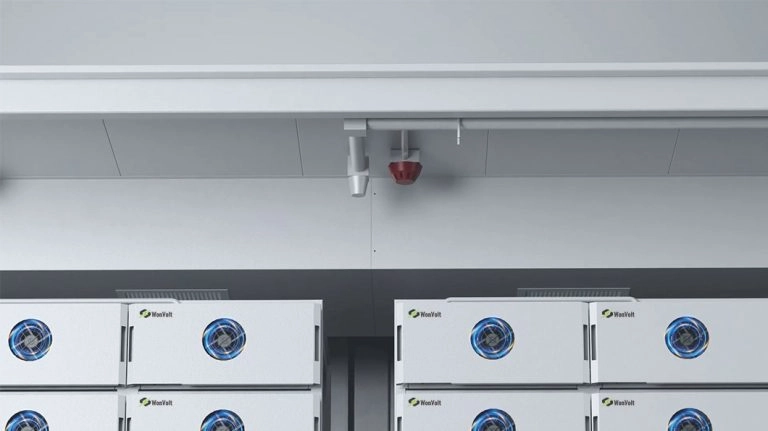
Fire Protection Must Be Built Into the System
For large solar projects, safety should not be treated as an optional accessory. Smoke and temperature sensing, automatic fire suppression, ventilation, exhaust design, and electrical protection should be part of the original container design.
You should also check whether the container layout separates the battery area and electrical area clearly. A good structure makes inspection easier and helps isolate faults. Daily checks should include cabinet sealing, cable tightness, coolant level, pipe leakage, abnormal inverter noise, overheating, alarm information, and battery temperature distribution.
Which BESS Container Fits Large Solar Plant Scenarios?
The right model depends on project size, discharge duration, grid support demand, and site conditions. EPC buyers should avoid choosing a container only by the largest capacity. A medium project may need a flexible system. A larger utility project may need higher capacity and stronger grid support.
ThorVolt 2.0 for Medium Scale Sites
ThorVolt 2.0 is a containerized BESS option with capacity up to 1.7MWh. It is more suitable when the project needs storage for medium industrial and commercial sites or staged solar plant expansion. If the EPC scope includes a smaller substation area or limited installation space, a compact and integrated design can reduce wiring and commissioning work.
PoseidonVolt 2.0 for Larger Grid Support Projects
PoseidonVolt 2.0 offers capacity up to 5MWh and is positioned for large industrial and commercial projects or utility scale grid support. For solar plants that need output smoothing, peak shaving, renewable energy absorption, or grid dispatch support, this type of larger BESS container is usually closer to the real project demand.
If you are comparing storage options across project sizes, the broader WonVolt Solution page can help you separate home, industrial and commercial, and utility scale scenarios before the technical selection stage.
How Can EPC Buyers Reduce Installation and Operation Risk?
EPC buyers care about more than equipment delivery. They also need clear drawings, site adaptability, installation support, commissioning, training, and maintenance planning. A technically strong product can still create problems if service support is weak.
Choose Plug and Play to Shorten Site Work
A plug and play BESS container can reduce on site wiring, installation complexity, and commissioning time. It also helps EPC teams control labor cost and schedule risk. For remote solar plants or large sites with tight grid connection deadlines, pre integrated design can make the project easier to manage.
You should still check lifting space, container foundation, cable routing, transformer access, ventilation clearance, drainage, fire distance, and local electrical rules before shipment. These checks prevent redesign after the container arrives.
Ask for Custom Design Before Procurement
Every solar plant has different land conditions, grid codes, ambient temperature, power demand, and operation strategy. WonVolt provides pre sale engineer support for field investigation before design, and post sales engineer support for installation help, commissioning test, and technical training when needed.
For projects that sit between industrial storage and utility storage, you can also compare the Industrial and Commercial Solution with the utility scale system. If your EPC team already has site data, grid connection requirements, and storage goals, you can contact WonVolt through its contact page to discuss a project specific BESS plan.
FAQ
Q1: What Size BESS Container Should an EPC Buyer Choose for a Large Solar Plant?
A: You should choose the size based on solar plant capacity, grid export limits, discharge duration, peak demand period, and curtailment risk. Do not judge only by MWh. MW output, PCS capacity, and EMS control also matter.
Q2: Why Is PCS Important in a BESS Container?
A: PCS controls bidirectional power conversion between the battery and grid. It affects charging, discharging, power quality, grid support, protection, and the ability to switch between different operating modes.
Q3: Is Liquid Cooling Always Needed for Large BESS Projects?
A: It depends on project size, ambient temperature, battery density, and operating load. For high capacity or hot climate projects, strong temperature control is important because battery temperature affects safety, cycle life, and output stability.
Q4: What Safety Features Should a Utility Scale BESS Container Have?
A: You should check smoke and temperature sensing, automatic fire suppression, exhaust design, temperature control, electrical protection, BMS monitoring, emergency response logic, and safe maintenance access.
Q5: Why Choose WonVolt for Utility Scale BESS Projects?
A: WonVolt provides containerized BESS solutions for 1MW to 5MW solar plants, with integrated battery, inverter, air conditioning, safety protection, and monitoring systems. Its Utility-Scale Solution also includes ThorVolt 2.0 and PoseidonVolt 2.0 options for different project sizes.