



A factory electricity bill is usually dominated by a few very short peaks, for example: a motor start, a line start up, a compressor start, a HVAC peak. In these situations even a slightly excessive maximum demand can result in a large increase in costs, even when the total amount of energy is largely unchanged. For a C&I energy storage system to add value it needs to be able to charge, to discharge and to respond at the required time. Here the PCS plays a crucial role. The battery stores energy, but the PCS is used to move the energy between the storage, the various loads, the solar PV and the grid.
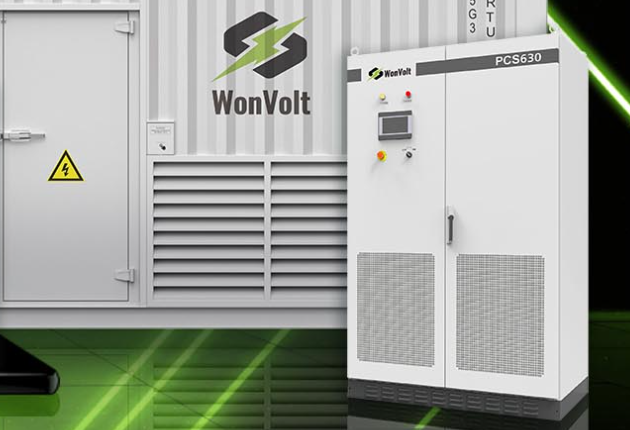
Why Does Peak Shaving Depend on PCS Control?
Peak shaving is not just about installing more battery capacity. You need a system that can detect load changes, release power fast enough, and stop discharging before battery safety is affected. In a factory, the power curve can change many times in one shift, so the PCS must work with BMS and EMS instead of acting as a simple inverter.
PCS Is the Power Bridge Between Battery and Factory Loads
PCS, or power conversion system, performs bidirectional conversion between alternating current and direct current. During charging, it converts AC power into DC power and stores it in the battery. During discharging, it converts DC power back into AC power for your factory loads or grid interaction.
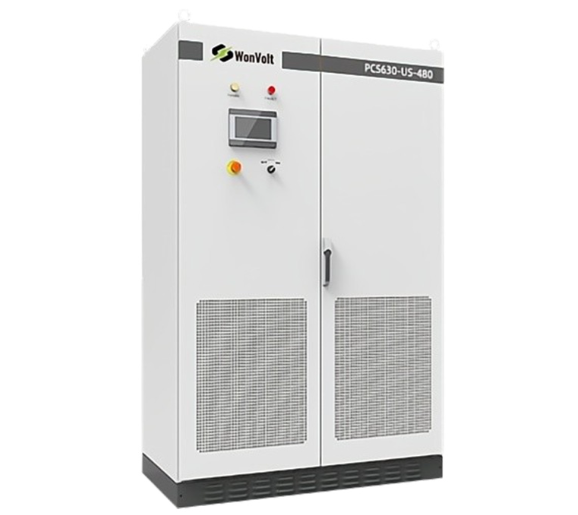
A component such as the 100KW-1MW Battery Inverter Bidirectional PCS100-1000-US fits this role inside a larger C&I ESS. It is not the whole solution, but it is a key power conversion layer. Without stable PCS control, the battery cannot support peak shaving, backup power, solar self-consumption, or microgrid operation in a safe and efficient way.
PCS Helps You Control Maximum Demand
For industrial and commercial distributed energy storage, one major goal is demand management. The system can control the maximum demand within the contract limit, which may reduce demand-related electricity charges. The PCS executes the power command when the EMS decides that the load is reaching a peak.
For example, if your factory load is moving close to the limit, the EMS can send a discharge command. The PCS then releases battery power to cover part of the load. From the grid side, the demand curve becomes flatter. This is the core logic of smarter peak shaving.
How Does a 100kW to 1MW PCS Fit Factory Energy Storage?
A 100kW to 1MW PCS range is useful for many factories because it covers small workshops, medium production sites, warehouses, industrial parks, and solar plus storage projects. The right PCS power depends on your peak load, transformer capacity, tariff structure, battery size, and backup target.
Match PCS Power to Your Load Curve
Before choosing PCS size, you should study your load profile. A factory with a short 150kW peak may not need a 1MW PCS. A site with several production lines, cold storage, air compressors, and large motors may need a higher-power configuration.
A practical sizing review should include:
- Maximum demand in the last 12 months
- Peak duration and peak frequency
- Transformer capacity and contract limit
- Critical load list
- Solar PV capacity, if available
- Planned battery capacity and discharge time
For a typical industrial and commercial distributed PV storage project, a 500kW PCS can work with 1MWh battery storage and 1MW photovoltaic capacity. During the day, PV power can supply factory loads first. Excess solar energy can charge the battery. At night or during peak-price periods, the battery can discharge and the grid can act as a supplement.
Choose System Design Around the Whole Solution
The PCS should not be selected alone. It must match the battery system, BMS, EMS, switchgear, transformer, fire protection, communication layer, and site control logic. If you are planning a full C&I project, the Industrial and Commercial Solution should be reviewed as a complete system rather than a list of separate devices.
This matters because peak shaving needs coordination. The BMS protects the battery. The PCS converts and controls power. The EMS analyzes load forecasts, electricity prices, and system constraints. When these layers work together, your storage system can reduce peaks without stressing the battery or interrupting production.
What Makes PCS Safer for Factory Use?
Factory users usually care about three things: safety, uptime, and predictable savings. A PCS supports all three only when it has strong control and protection functions. It must respond quickly, communicate clearly, and stop unsafe operation before a fault grows.
BMS Communication Protects Battery Operation
PCS communicates with the BMS through interfaces such as CAN to obtain battery status. This helps the PCS know whether charging or discharging is allowed. The BMS monitors battery voltage, current, temperature, state of charge, and fault signals. If the battery is too hot, too low, too full, or abnormal, the PCS should reduce power or stop.
This is important because battery packs contain many cells connected in series and parallel. Pack consistency affects life and usable capacity. If one weak part is pushed too hard, the whole system may lose performance. Good PCS and BMS coordination helps extend battery life and improves system safety.
Protection Functions Reduce Site Risk
A factory PCS should support protection against overvoltage, undervoltage, overload, overcurrent, short circuit, overheating, and islanding risk. Startup and shutdown self-test also matter because they help detect abnormal conditions before operation.
In grid connected mode, the PCS supports bidirectional energy flow, safety protection, and power quality optimization. In off grid mode, it can provide stable AC power for local loads. In hybrid mode, it can switch between grid connected and off grid operation based on site conditions. These modes allow your ESS to handle more than cost savings. It can also support backup power and local energy reliability.
How Does PCS Work With EMS for Smarter Peak Shaving?
PCS executes power conversion, but EMS decides the strategy. A factory that wants real savings should not rely on fixed charge and discharge times only. Your load changes, production plans change, and electricity prices may vary. EMS makes the system more adaptive.
EMS Builds the Operating Strategy
An EMS coordinates the grid, users, solar storage, charging equipment, PCS, and BMS. It collects data from each subsystem, monitors operation, and generates control decisions. For industrial and commercial energy storage, EMS can support peak valley arbitrage, peak capacity reduction, demand response, and remote centralized control.
When load forecasts show a coming peak, EMS can prepare the battery. When PV output rises, EMS can choose whether to supply loads, charge batteries, or interact with the grid. When an alarm appears, EMS can adjust the PCS command and protect the system.
Dashboards Make Operation Easier
A good EMS should offer a clear visual interface through a web platform, app, or HMI terminal. Your team should be able to view power flow, battery status, PCS output, alarms, historical data, and operating records. This reduces guesswork and helps your operation team verify whether peak shaving is working.
For sites planning several storage projects, the broader solution page can help you compare industrial and commercial storage, solar storage, and larger project structures. If your site may expand from a factory ESS to a larger energy station, the utility-scale solution can also provide a useful reference for system planning.
What Should You Check Before Choosing PCS for a Factory?
The best PCS choice starts with your factory data, not a product label. A wrong size may raise cost, reduce savings, or limit future expansion. A suitable PCS should match both today’s peak shaving target and tomorrow’s production growth.
Ask These Technical Questions First
Before confirming a PCS model, check these points:
- Can the PCS power rating cover the target peak reduction?
- Does it support bidirectional charging and discharging?
- Can it communicate with BMS and EMS smoothly?
- Does it support local manual, local automatic, and remote control?
- Can it operate in grid connected, off grid, and hybrid modes?
- Does it provide active and reactive power control?
- Does it include complete protection and fault diagnosis?
- Can the system expand through parallel control if your load grows?
These questions help you avoid a common mistake: buying a PCS that can convert power but cannot support the full energy strategy.
Use Engineering Review Before Final Design
Peak shaving depends on load data, tariff rules, transformer limits, battery capacity, PCS power, and control strategy. Before final design, you should prepare power bills, load curves, site layout, solar capacity, operating hours, and backup needs. An engineering review can then calculate a better charge and discharge plan.
For project support, technical discussion, or site-specific questions, you can contact Wonvolt to start a design conversation. This is especially helpful when your factory needs customized peak shaving, PV storage, backup power, or future expansion.
FAQ
Q1: What Does PCS Do in Factory Energy Storage?
A: PCS converts power between AC and DC. It charges the battery from AC power and discharges battery DC power back into AC power for factory loads or grid interaction. It also follows EMS commands and checks BMS data for safer operation.
Q2: Is a Bigger PCS Always Better for Peak Shaving?
A: No. A bigger PCS may raise cost without improving savings if your peak load does not need that much power. You should size PCS based on load curves, peak duration, transformer capacity, battery capacity, and tariff structure.
Q3: How Can a 100kW to 1MW PCS Reduce Factory Electricity Costs?
A: It can discharge during peak demand periods to reduce grid demand. It can also charge during low-price periods or from excess solar power, then discharge during high-price periods. This supports peak shaving and peak valley arbitrage.
Q4: Why Must PCS Work With BMS and EMS?
A: BMS protects battery safety by monitoring voltage, current, temperature, and state of charge. EMS sets the operating strategy. PCS executes charge and discharge commands. The three layers must work together for safe and profitable operation.
Q5: When Should You Consider PCS Parallel Expansion?
A: You should consider expansion when your factory load may grow, when PV capacity may increase, or when future battery capacity may be added. Parallel design can help a smaller system scale toward a larger C&I ESS without replacing the whole architecture.