



Peak shaving and self-consumption are two concepts that sound simple enough. Charge up when electricity is cheap, or when your solar system is generating power, and then discharge when the power market is charging a premium or when there is a peak in demand. In reality however, the outcome of a project depends heavily on a number of factors including the correct sizing of the battery, the discharge current of the battery, the cycle life of the battery, the settings on the BMS, the correct sizing and specification of the inverter, the ambient temperature at the site, and the typical daily load at the site. A lithium battery cluster is not just a piece of storage, it is a fundamental component of your overall power strategy, and if you get it wrong then you are likely to be stuck with a very poor return on your investment for many years.
Why Does Peak Shaving Need the Right Battery Cluster?
Peak shaving works only when the battery can discharge at the right time, at the right power level, and often enough to make the investment worthwhile. A factory, farm, resort, processing site, or commercial building may not need the biggest battery. It needs a battery cluster that fits the actual load curve.
Match Battery Capacity With Real Load Peaks
Start with your demand data. Look at the highest load periods during the day, not only the total monthly electricity bill. A site with a short but sharp peak may need strong discharge power. A site with long evening demand may need more usable energy.
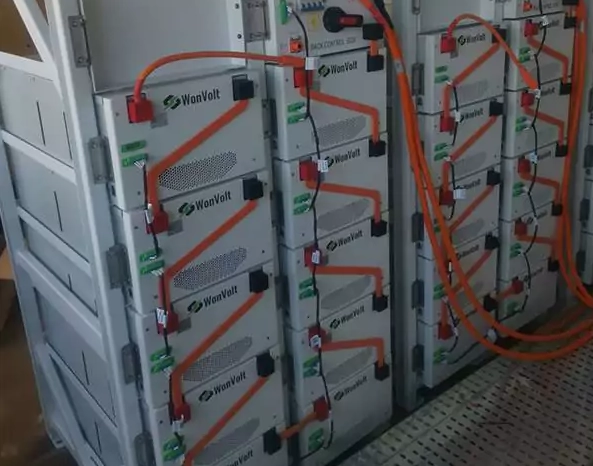
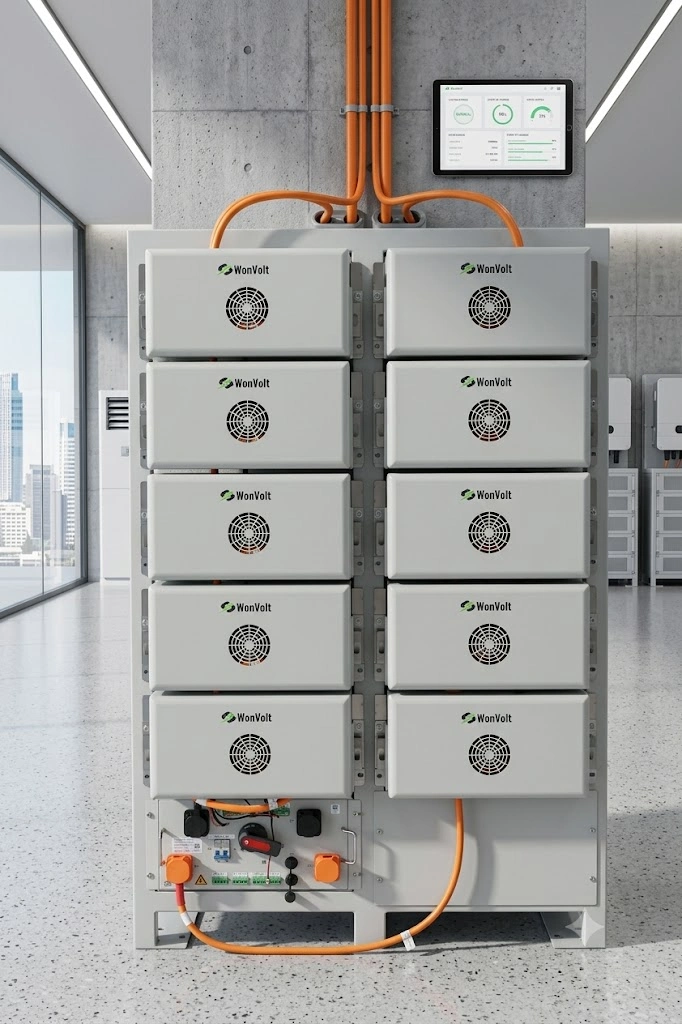
The 100-261kwh Lithium Battery Cluster 51.2V 314AH fits this type of project because it gives buyers a practical capacity range for commercial and industrial storage. Its 51.2V 314AH module design can support cluster configuration for larger storage demand, while the 100-261kwh range makes it easier to scale a system without jumping directly into container level storage.
Check Discharge Rate Before You Check Price
For peak shaving, discharge rate matters. A battery that stores enough energy but cannot release it fast enough may still leave your facility paying high peak charges. WonVolt’s battery cluster supports 0.5C discharge, which is a balanced choice for many commercial energy storage projects. It gives useful power output while keeping investment and battery stress under better control.
If your load peak lasts two to four hours, a 0.5C design is often more practical than chasing a higher discharge rate that may not be used daily. This is where many buyers spend more than needed.
How Does Self-Consumption Change the Selection Logic?
Self-consumption is different from backup power. The battery is charged and discharged more regularly, especially when paired with solar panels. That means cycle life, BMS quality, and energy management become more important than a simple nameplate capacity.
Store Solar Power Instead of Wasting It
Solar output often peaks when site demand is not at its highest. Without storage, part of that energy may be exported at a low value or even curtailed. With a lithium battery cluster, you can store midday solar energy and use it later for office loads, machines, cold storage, pumps, lighting, or charging equipment.
WonVolt positions energy storage as part of a wider clean energy setup. On the WonVolt Solution page, buyers can compare home, industrial and commercial, and utility scale directions before choosing the right system level. This is useful because a self-consumption project should not be selected as a single battery purchase. It should be planned as a full energy system.
Use BMS to Protect Daily Cycling
Daily cycling puts pressure on a battery system. A smart BMS helps monitor voltage, current, temperature, state of charge, and abnormal conditions. It helps avoid overcharge, overdischarge, short circuit, and other risks that can reduce battery life.
The WonVolt product page highlights Smart BMS as a key safety and performance feature. For your project, this matters because self-consumption systems may cycle almost every day. The battery should not only work in year one. It should keep stable performance after thousands of cycles.
Which Technical Details Should You Check First?
A good battery cluster is easier to choose when you read the data sheet like an engineer, not like a brochure. Focus on the specifications that affect daily use and service life.
LFP Cells and Cycle Life
LiFePO4 cells are widely used in commercial and industrial energy storage because they offer good safety, long cycle life, and stable charge and discharge performance. WonVolt’s battery cluster uses LiFePO4 battery type and lists a cycle life of more than 10000 cycles at 25°C. It also states a 15 year design life on the product page.
That does not mean every site will get the same result automatically. Cycle life is affected by depth of discharge, charge and discharge rate, temperature, cell consistency, and system control. If you want longer service life, avoid pushing the battery to its limit every day unless the project calculation truly requires it.
Depth of Discharge and Usable Energy
Nominal energy and usable energy are not the same. The product page lists 80% depth of discharge. This figure helps you estimate how much energy can be used while keeping the battery within a healthier working range.
For example, if your site needs 160kWh usable energy during evening peak hours, you should not simply buy a nominal 160kWh system. You need to calculate usable energy based on DOD, inverter loss, cable loss, temperature, and future aging.
How Important Is Inverter Compatibility?
Inverter compatibility is one of the most common hidden problems in battery storage projects. The battery, PCS or hybrid inverter, EMS, and grid connection logic need to speak the same language. If not, commissioning becomes slow and troubleshooting becomes expensive.
Check Voltage Platform and Communication
The WonVolt battery cluster has 51.2V nominal voltage at module level, 314AH nominal capacity, and an operating voltage range of 43.2V to 57.6V. It also supports smart air cooling and UN38.3 certification. For real project use, you should check how the cluster connects with your inverter or PCS, how the communication protocol works, and whether the system supports your target voltage platform.
The product page also notes support for both 1000V and 1500V systems. That gives more room for different project designs, especially when storage is planned together with solar and commercial power loads.
Plan the Whole C&I System
Industrial and commercial energy storage usually includes battery packs, BMS, EMS, PCS, temperature control, and fire protection. The battery stores energy. The PCS converts DC and AC. The EMS decides when to charge and discharge based on load, electricity price, solar generation, and grid rules.
If your project is mainly for factories, mining sites, farms, raw material processing, or similar medium to large commercial loads, you can also review the Industrial and Commercial Solution to match battery clusters with a complete energy storage plan.
Why Should Service Support Matter Before You Buy?
A lithium battery cluster is not a plug in purchase for most commercial projects. It needs project sizing, electrical design, installation checks, commissioning, and operation rules. Good support before shipment can prevent many problems after arrival.
Ask for Site Based Design
WonVolt was founded in 2016 and has two factories in Hefei, China. The company focuses on clean energy solutions, including solar panels, lithium batteries, containerized BESS, liquid cooling lithium batteries, smart air cooling lithium battery products, and residential battery systems. It also states 1.2GW solar panel capacity and 2.5GWh lithium battery capacity.
For project buyers, the more useful point is service support. WonVolt provides pre sale engineer support for field investigation before design and post sale engineer support for installation help, commissioning tests, and technical training when needed. You can learn more from the About WonVolt page.
Build the Selection Around Payback
A battery cluster for peak shaving and self-consumption should help reduce peak demand cost, increase solar self-use, lower generator use, and improve power stability. The best choice is not always the largest battery. It is the model that matches your daily load, tariff structure, solar output, site space, and expansion plan.
If you already have load data, solar capacity, inverter model, and expected discharge hours, it is better to discuss the project directly through the WonVolt Contact Us page. A clear design brief will help the supplier recommend a safer battery cluster size and avoid overbuying.
FAQ
Q1: How Do You Size a Lithium Battery Cluster for Peak Shaving?
A: Start with your daily load curve. Check when the peak appears, how long it lasts, and how much power needs to be reduced. Then calculate usable battery capacity based on DOD, discharge rate, inverter loss, and aging margin.
Q2: Is a 0.5C Discharge Battery Enough for Commercial Energy Storage?
A: For many commercial and industrial peak shaving projects, 0.5C is a balanced option. It can support useful power output while reducing unnecessary investment in a discharge rate that may not be needed every day.
Q3: Why Does Self-Consumption Need Long Cycle Life?
A: Self-consumption systems often charge from solar power and discharge later each day. This regular cycling makes cycle life important. A battery with more than 10000 cycles can support a longer operating plan when used under proper conditions.
Q4: What Does Smart BMS Do in a Lithium Battery Cluster?
A: Smart BMS monitors battery voltage, current, temperature, SOC, and safety status. It helps protect the system from overcharge, overdischarge, short circuit, and abnormal temperature, which is important for daily use.
Q5: When Should You Choose WonVolt’s 100-261kwh Lithium Battery Cluster?
A: It is suitable when you need commercial or industrial energy storage for peak shaving, solar self-consumption, backup support, or energy cost control, and when a scalable 51.2V 314AH LiFePO4 cluster fits your project design.