



A zero export solar system can still send a short pulse of power to the grid because measurement and control take time. The meter or current transformer detects a load change, the controller calculates a correction, and the inverter changes output only after that chain has responded. If a large motor or heater switches off faster than the control loop can reduce generation, surplus power reaches the point of common coupling for a brief interval.
Reliable export limitation therefore depends on more than enabling a menu setting. CT direction, phase mapping, sensor location, communications, inverter ramp behavior, battery charge headroom, and load-step testing all matter. A site that passes a steady midday test may still fail when a compressor, pump, kiln, or production line changes state abruptly.
Key Takeaways
- Place and orient the grid sensor at the true point of common coupling, with every controlled source and site load on the correct side.
- Keep a small import bias or another approved operating margin when the grid operator requires no reverse power at any instant.
- Test the largest credible load rejection and review high-resolution meter data instead of accepting a steady-state reading alone.
Zero Export Is a Feedback Loop, Not a Physical Barrier
The controller does not block electricity like a check valve. It observes power flow at the grid connection and commands the inverter or battery system to keep that flow at a target. In normal operation, the target may be zero export or a small amount of grid import. Every feedback loop has sampling, communication, calculation, and actuation delays, so the measured result can momentarily cross the target.
Consider a site importing 5 kW while solar supplies 40 kW to a 45 kW load. If a 20 kW load disconnects, the site suddenly has 15 kW more generation than demand. Until the inverter reduces output or the battery absorbs that surplus, power moves toward the grid. This is a general control example, not a stated product response time. The actual magnitude and duration depend on the meter, controller, network, inverter, battery, and load event.
Where Export Limit Control Commonly Breaks Down
Most commissioning failures fall into measurement, topology, or response categories. The symptoms can look similar, but the corrective action is different.
CT Direction and Phase Mapping
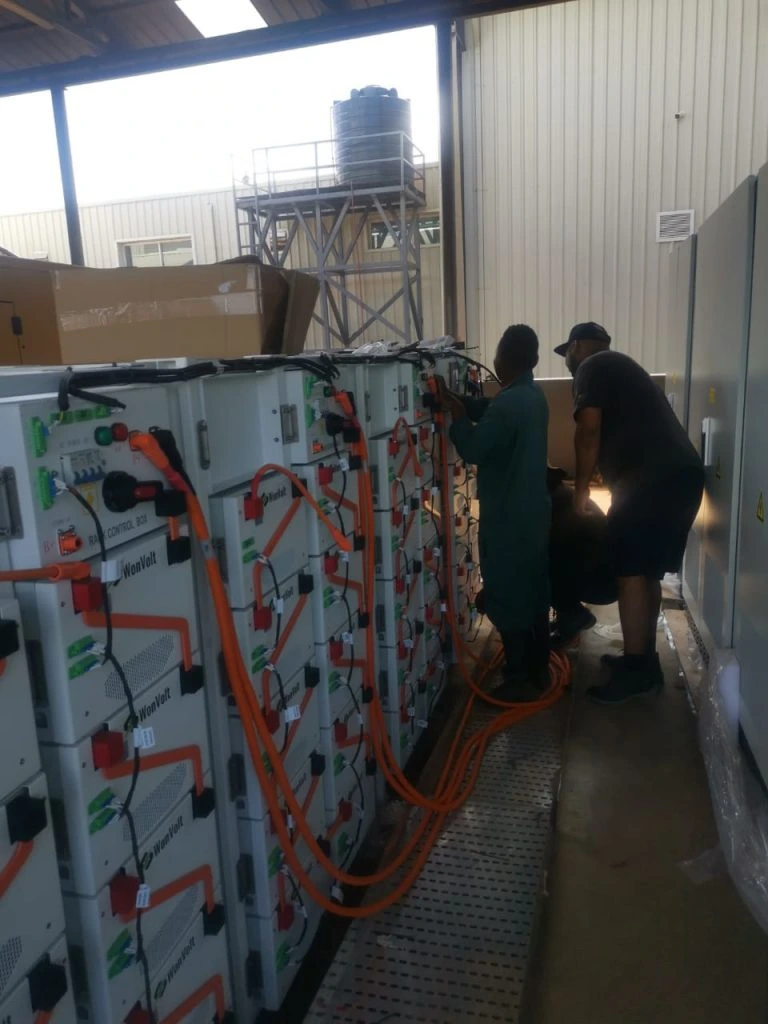
A reversed CT can make import appear as export, causing the controller to correct in the wrong direction. On three-phase systems, assigning a sensor to the wrong phase can produce plausible total power while individual phase values are wrong. Confirm polarity marks, phase order, meter sign convention, and live power direction with a known load before enabling automatic control.
Sensor Location and Unmeasured Sources
The sensor must see the net exchange between the entire controlled site and the grid. If another inverter, generator, tenant load, or bypass feeder sits outside the measurement boundary, the controller works with incomplete information. Compare the single-line diagram with the installed conductors; do not infer the boundary from cabinet labels alone.
Communication and Update Rate
A correct meter can still feed stale data through a slow or unstable communications path. Check meter update rate, controller polling interval, network latency, lost packets, register scaling, and timestamp alignment. Avoid assuming that a fast inverter will compensate for a control command that arrives late.
Battery Absorption Headroom
A battery can absorb temporary surplus only when its state of charge, charge-current limit, temperature, and BMS status permit charging. A nearly full or cold battery may reduce its allowed charge power. The controller then has to curtail the inverter quickly, so an export pulse can become larger than it was during an earlier test with more battery headroom.
Commission the System with Disturbance Tests
A zero export acceptance test should create controlled changes that resemble the site’s real operation. Begin at low power to prove direction and phase mapping, then test progressively larger events within the approved commissioning procedure. Capture both the site controller record and an independent meter at the grid connection when possible.
| Test Event | Evidence to Capture | Failure Indication |
| Known load turns on | Grid power sign, per-phase values, inverter response | Wrong CT polarity, phase mapping, or scaling |
| Known load turns off | Peak reverse power, pulse duration, command timing | Slow loop, insufficient margin, or curtailed charging |
| Battery near upper SOC limit | BMS charge limit and inverter curtailment response | Export control depends on unavailable battery headroom |
| Communications interruption | Alarm, fallback setpoint, and recovery behavior | Uncontrolled output or an unsafe automatic restart |
| Asymmetrical phase load | Per-phase and total exchange at the grid meter | Control method does not satisfy the local phase rule |
Do not choose an acceptance threshold from a generic blog value. The permitted reverse-power magnitude, averaging interval, and phase treatment belong to the grid connection agreement or local utility requirement. Record the exact rule and configure the test instrument accordingly.
Why a Small Import Bias Can Improve Compliance
A small positive import target creates room for measurement noise and control delay. Instead of aiming at exactly 0 kW, the controller intentionally keeps the site drawing a modest amount from the grid. When a load drops, the surplus first consumes that margin before becoming reverse power. The cost is minor additional imported energy, so the correct bias is a trade-off between compliance margin and energy optimization.
The bias must account for meter accuracy, minimum controllable inverter power, load volatility, controller update rate, and the grid operator’s assessment method. Setting a large fixed bias without measurement wastes energy; setting it too close to zero may leave no room for a fast load rejection. Tune it from recorded site data and repeat the worst credible switching event.
A System Example with Export Limitation
The 50kW 55.3kWh to 100kWh Hybrid Solar Power System combines a 50 kW hybrid inverter with a listed 55 kWh 1C lithium battery, with 100 kWh optional. Its product page states a function intended to prevent excess power from flowing to the grid, along with on-grid and off-grid operation and parallel support. The listed architecture makes it relevant to commercial sites, but the export-control result still depends on the installed CT or meter boundary, approved settings, communications, and disturbance testing.
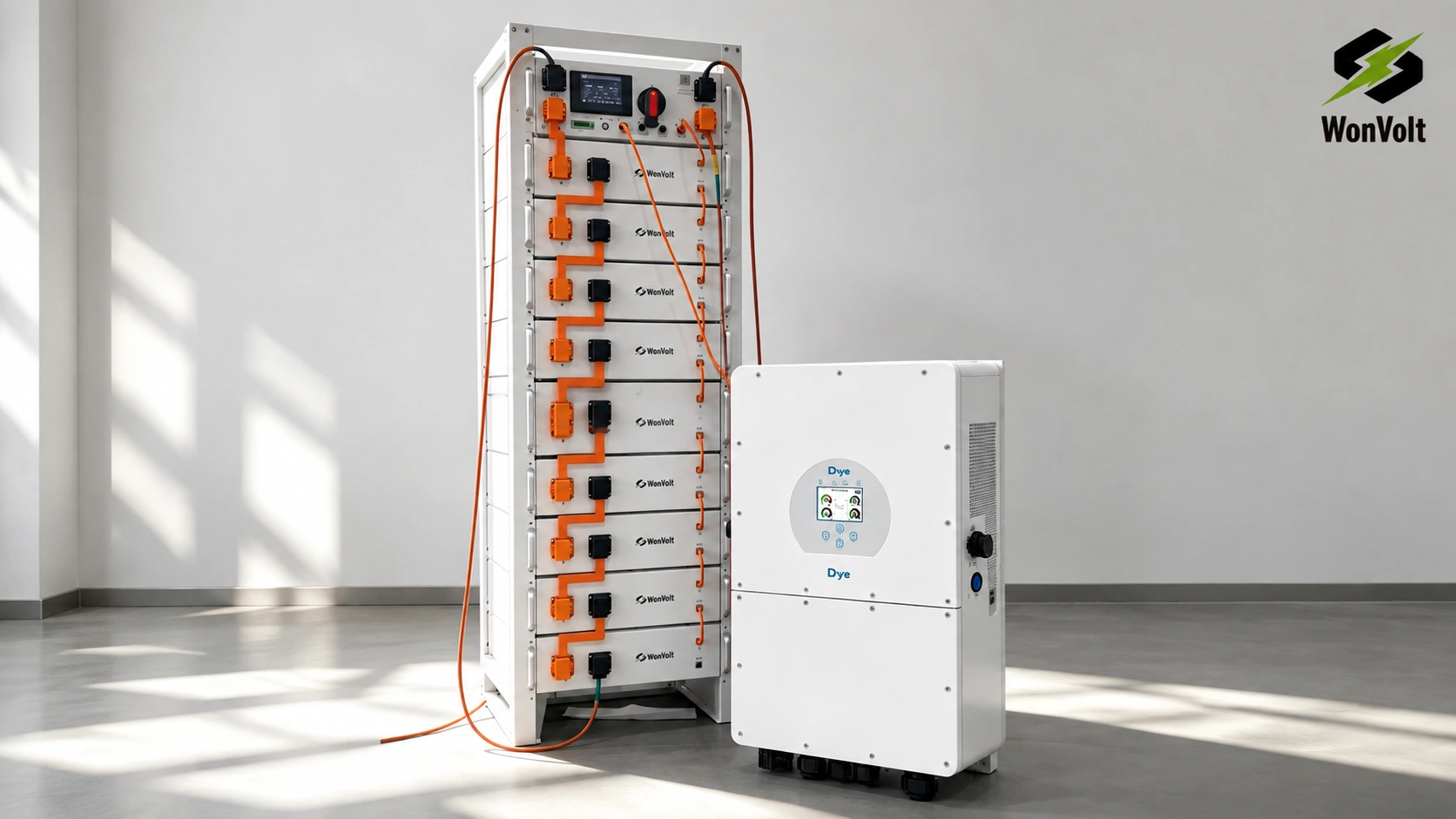
The configuration lists a three-phase 380 to 400 VAC inverter, 4G WiFi monitoring, and an optional 50 kW automatic transfer switch. The project must still confirm grid-voltage compatibility, transfer behavior, protection coordination, metering class, and the exact export-limitation requirement.
Two Commissioning Traps That Produce False Confidence
The first trap is testing only when solar output is low. At low generation, the site may keep importing even if the CT is misplaced or the control response is slow. Repeat the test at an operating point where generation could exceed the remaining load, and include the largest normal load that can disconnect in one step.
The second trap is relying on slow dashboard averaging. A five-minute chart can hide a two-second reverse-power pulse. Use a suitable meter and logger, synchronize timestamps, and preserve the raw trace; a controller screenshot cannot prove zero export under dynamic conditions.
What to Put in the EPC Acceptance File
The handover package should make the control boundary and fallback behavior unambiguous. Include the as-built single-line diagram, CT ratio and polarity, meter model and scaling, phase map, communication topology, zero-export target, import bias, inverter ramp settings, battery charge limits, disturbance-test records, and the response to lost meter data.
Financial review should also include energy consumed by auxiliary equipment, curtailment, and the operating margin used to prevent export. The LCOE hidden-cost analysis gives useful context for costs that simple equipment pricing can miss.
For integrated commercial projects, WonVolt supplies batteries, inverters, and complete energy solutions. Use the solution portfolio to identify the correct system class, then submit the load profile, single-line diagram, grid rule, site voltage, and largest load step for engineering review.
FAQ
Does zero export mean the site can never send any power to the grid?
That depends on the grid rule and control design. A feedback system can produce short transients because sensing and inverter response are not instantaneous. The acceptance criterion must define magnitude, duration, averaging, and phase treatment.
Where should the zero export CT be installed?
It should measure net site exchange at the true point of common coupling. Every controlled generator, battery, and relevant site load must sit on the intended side of that measurement boundary.
Why does the system export when a large motor stops?
Generation does not fall at the exact instant the load disappears. During the control delay, surplus power moves toward the grid unless an available battery or another fast control action absorbs it.