



To expand a 48V lithium battery bank safely, confirm more than nominal voltage. Check the existing battery model, usable voltage window, battery management system communication, maximum parallel quantity, current-sharing method, cable resistance, protection settings, state of charge, firmware, and inverter charge profile. The safest route is usually to add approved matching modules under a documented manufacturer procedure. Mixing different chemistries, capacities, ages, or BMS protocols can cause uneven current, nuisance trips, reduced usable capacity, or excessive stress even when every label says “48V.”

Key Takeaways
- Nominal voltage alone does not prove that two lithium batteries can operate in parallel.
- Use matching approved modules whenever possible and follow the stated parallel limit.
- Equalize state of charge before connection and use balanced cables, fuses, and disconnects.
- Confirm inverter settings and BMS communication before energizing the expanded bank.
- Plan spare capacity at the design stage if future growth is likely.
Start with the Load and Energy Requirement
Expansion should solve a measured shortfall. A larger battery does not automatically fix an inverter that is undersized, a solar array that cannot recharge the bank, or a load with a high starting current.
Separate Power from Energy
Power, measured in kW, describes how much the system can deliver at one moment. Energy, measured in kWh, describes how long it can continue. If a workshop needs more runtime overnight, added energy capacity may help. If a motor trips the inverter during startup, the limiting factor may be inverter surge capability or battery discharge current instead.
Build a load list with running power, starting power, daily operating hours, and criticality. Then compare it with logged inverter and battery data. This keeps the expansion tied to a real operating need.
Estimate the New Usable Capacity
Use usable energy rather than the nameplate figure. Battery controls reserve part of the state-of-charge range, and cold or hot conditions can change available power. Conversion losses also reduce the energy that reaches AC loads. Avoid a precise runtime promise until the supplier has reviewed your load profile and operating limits.
Why Matching Matters in a Parallel Battery Bank
Parallel batteries share a common bus, but they do not always share current evenly. Small differences in internal resistance, state of charge, wiring, temperature, and BMS behavior can become large operating differences.
Voltage Is Only the First Screen
The common “48V” description covers products with different cell counts, charge limits, discharge cutoffs, and communication methods. Confirm the full voltage range and chemistry. Never parallel a lithium module with a lead-acid bank or another chemistry simply because the nominal voltage is similar.
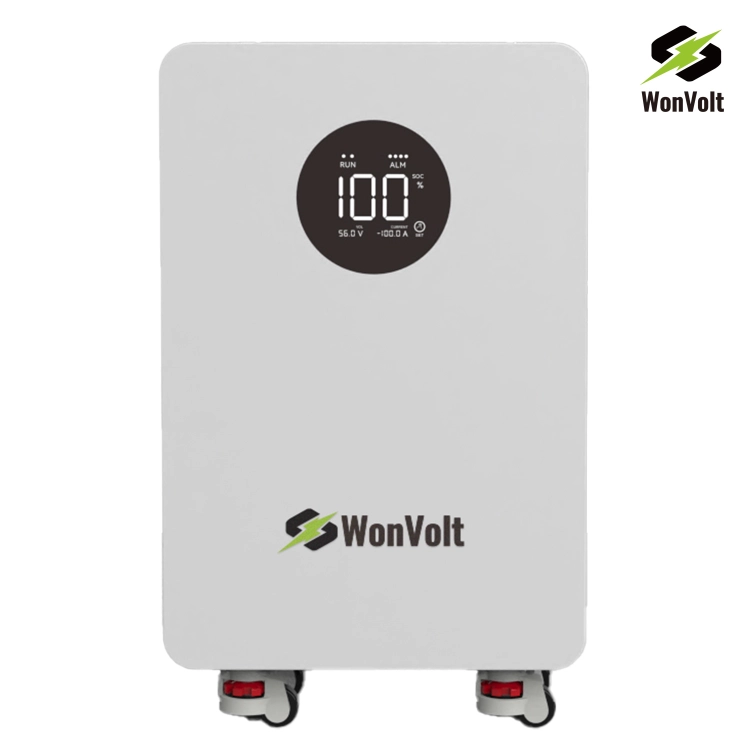
For a current project, review a defined product rather than a generic category. WonVolt offers a 16.07 kWh, 51.2V low-voltage lithium battery. Ask for the current datasheet, installation manual, approved inverter list, and parallel-expansion procedure before deciding whether it fits an existing bank.
Age and State of Health Affect Sharing
An older battery may have higher resistance and lower usable capacity than a new one. During charge or discharge, the modules can reach their individual limits at different times. The first BMS to limit current may reduce the performance of the whole bank. Ask the manufacturer whether new modules can be added to an aged installation and what state-of-health difference is acceptable.
Communication Must Scale Too
Many lithium systems use CAN or RS485 communication between batteries and the inverter. A parallel bank may require one master battery, assigned addresses, termination resistors, and a specific startup order. Confirm that the inverter firmware supports the battery protocol and the intended module count.
Design the DC Side for Equal Current
Good current sharing depends on electrical symmetry. A neat installation can still perform poorly if one battery has a shorter or lower-resistance path to the bus.
Use Balanced Cable Paths
Follow the manufacturer’s approved busbar or diagonal-connection arrangement. Keep equivalent positive and negative path resistance for each module. Use the specified conductor size, lug type, crimp method, and torque. Route communication cables according to the manual and separate them from noise sources where required.
Protect Each Branch
Each battery branch may need its own fuse or breaker and disconnect. Protection must suit DC voltage, prospective current, cable rating, and the manufacturer’s instructions. A common upstream breaker does not always protect every parallel branch against a fault fed by the other batteries.
The WonVolt home solution can frame a discussion about the battery, inverter, and generation source as one system. The final protective design should still be completed by a qualified designer under local electrical rules.
Follow a Controlled Expansion Sequence
The exact sequence must come from the product manual. A typical engineering workflow includes the following checks, but it does not replace the approved procedure.
Record the Existing System
Capture model numbers, serial numbers, firmware, battery cycles, alarms, maximum and minimum cell voltage, state of health, inverter settings, cable sizes, and protection ratings. Photograph labels and terminations before changing the system.
Isolate and Equalize Safely
Shut down and isolate the system with the approved procedure. The new and existing modules may need to reach a closely matched state of charge before paralleling. Do not improvise by directly connecting batteries with a large voltage difference; the equalization current can be severe.
Configure Before Full Load
Set addresses, master and slave roles, communication termination, and inverter battery type. Confirm that every module appears in monitoring. Start with controlled charge and discharge tests before returning critical loads to normal operation.
Verify Current Sharing
Measure branch current under charge and discharge. Check cable and terminal temperature, alarms, reported state of charge, and the point where charge or discharge limits begin to change. Record these results for future maintenance.
Common Expansion Mistakes
One frequent mistake is adding capacity without checking recharge time. A larger bank may remain partly charged if the available solar or grid-charge window is too small. Long periods at an unsuitable state of charge can undermine the expected benefit.
Another mistake is combining battery modules based on marketplace descriptions. Similar enclosures can hide different cells, BMS firmware, connectors, and protection logic. Use approved combinations and written confirmation.
A third mistake is increasing battery discharge capability while ignoring the inverter and DC switchgear limits. More parallel modules can supply more current, but the inverter input, busbars, fuses, and cables must remain within their ratings.
Plan for Expansion Before the First Installation
If demand is likely to grow, reserve floor or wall space, cable routes, busbar capacity, protection positions, communications addresses, and inverter headroom from the start. Also record the deadline or conditions for adding matching modules. Product generations change, and a compatible module may not remain available indefinitely.
WonVolt provides energy solutions for several application scales. Buyers can identify the likely system class, then submit the load profile, inverter details, and existing battery records through the contact page. Request written confirmation of compatibility and the approved commissioning steps before ordering expansion hardware.
FAQ
Can any two 48V lithium batteries be connected in parallel?
No. Their chemistry, voltage range, BMS protocol, firmware, capacity, age, and manufacturer approval must be compatible.
Must batteries have the same state of charge before connection?
They normally need to be closely matched under the manufacturer’s procedure to avoid high equalization current.
Can a larger battery bank damage an inverter?
Added capacity alone does not force current into the inverter, but incorrect voltage, settings, protection, cabling, or available fault current can create hazards.
Why does one parallel battery discharge faster?
Unequal cable resistance, different temperature, age, state of health, state of charge, or BMS limits can cause uneven current sharing.
What evidence should be checked after expansion?
Verify communication, alarms, branch current, terminal temperature, charge and discharge limits, state-of-charge tracking, and protection operation.