



Commercial battery storage projects face a challenge: choosing the optimal system size to avoid underinvesting and meeting operational requirements. A factory does not consume constant power during the day. Production, start-up times of machinery, season-related consumption and peak power consumption create a load profile specific to a factory. A detailed load profile of a factory enables the designer to plan a battery storage system of the optimal size corresponding to the actual consumption needs.
Load Profile Analysis for Commercial and Industrial Users Analyzing the daily load profile of commercial and industrial users in relation to their storage capacity, power output and operating and management strategies to select the right equipment for an accurate storage concept to increase efficiency and to create a solid basis for successful long-term projects.
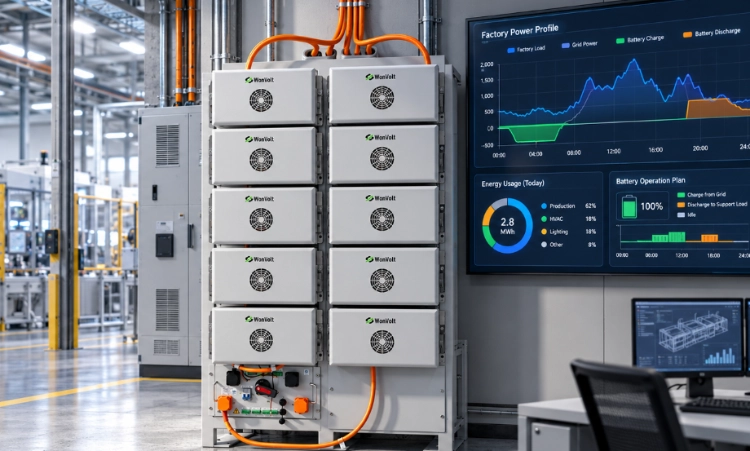
Why Factory Load Profiles Matter for Commercial Battery Storage Planning
A factory load profile is a record of how electricity demand changes over time. It shows when energy consumption rises, when demand decreases, and how much power different production periods require. For battery storage planning, this information provides the foundation for system design because storage performance depends heavily on when and how electricity is used.
Commercial energy storage systems are designed to balance electricity supply and demand. By analyzing your factory load profile, you can determine the suitable battery capacity, charging schedule, and discharge strategy for your facility.
Identify Daily Electricity Consumption Patterns
Factories usually have different operating stages during a typical day. Some facilities have high electricity demand during production hours and lower demand at night. Others operate continuously with stable power consumption.
A load profile allows you to see:
- Peak electricity demand periods
• Base load requirements
• Short-term power spikes
• Low-demand time windows
• Production-related consumption changes
This information helps you avoid oversized battery systems that increase initial costs while providing limited additional value.
For example, a factory with highest electricity consumption during the afternoon production will operate to charge up a battery storage system during off-peak / low-cost periods and release energy during peak consumption periods. This strategy prevents unnecessary consumption from the grid during periods when consumption is excessive or costly.
Improve Battery Capacity and Power Selection
Battery capacity and battery power are two different factors. Capacity determines how much energy can be stored, while power determines how quickly energy can be delivered.
A factory with high short-term power demand may require a system with stronger discharge capability. A facility with longer peak periods may need greater energy capacity.
By using factory load data, you can evaluate:
- Required discharge duration
• Daily charge and discharge cycles
• Energy shifting opportunities
• Backup power requirements
• Future expansion possibilities
This makes the storage design more aligned with actual operating conditions.
WonVolt provides industrial and commercial energy storage solutions designed for different application scenarios. Its Industrial & Commercial Solution focuses on matching storage configurations with commercial energy requirements, helping customers develop more suitable energy management plans.
How Load Profiles Support Better Energy Storage Strategies
After collecting factory electricity data, the next step is converting information into an effective storage operation strategy. A well-designed battery system should not only store electricity but also operate according to the factory’s energy behavior.
The relationship between load profile analysis and storage operation determines how effectively the system can reduce energy costs and improve energy utilization.
Optimize Peak Shaving and Energy Management
Peak shaving is one of the most common applications of commercial battery storage. It reduces electricity demand during high-consumption periods by supplying part of the required power from batteries.
Without load profile analysis, it is difficult to determine when peak demand occurs or how much energy needs to be released.
With accurate data, you can:
- Set battery discharge periods based on factory demand
• Reduce unnecessary grid power usage during peak hours
• Improve the utilization rate of stored energy
• Create more predictable energy management schedules
This approach is especially useful for factories with large production equipment, automated manufacturing lines, or fluctuating electricity demand.
Support Renewable Energy Integration
Many industrial facilities combine photovoltaic systems with battery storage. Solar generation changes throughout the day, while factory electricity demand may follow a different pattern.
A load profile helps you coordinate solar generation and battery operation. When solar production exceeds factory consumption, excess electricity can be stored. When solar generation decreases, stored energy can support factory operations.
WonVolt develops integrated clean energy solutions that combine solar generation and energy storage technologies. The company specializes in industrial and commercial energy storage systems and provides solutions covering solar modules, battery systems, and related energy equipment. WonVolt About Us
Selecting the Right Battery System Based on Factory Requirements
Once your load profile is clear, selecting suitable storage equipment becomes more accurate. The system should match the factory’s energy goals, installation conditions, and operating environment.
Different factories may require different storage designs. A small commercial building may focus on electricity cost management, while a large industrial facility may need higher capacity and stronger operational flexibility.
Choose Suitable Battery Capacity for Long-Term Operation
Battery capacity should match your daily energy usage rather than only your maximum electricity demand.
Important factors include:
- Average daily consumption
• Peak demand duration
• Required backup time
• Charging opportunities
• Expected future load growth
A properly sized system can maintain stable operation while avoiding unnecessary investment.
For projects requiring medium-scale commercial storage, the 100-261kWh Lithium Battery Cluster 51.2V 314Ah is designed as a lithium battery storage option for industrial and commercial applications. This energy storage system is designed with a 51.2V 314Ah configuration and has an energy capacity of up to 261kWh, making it highly suitable for a variety of different applications and flexible deployment at customer facilities. Ideal for peak load shaving, renewable energy storage, and commercial energy optimization.
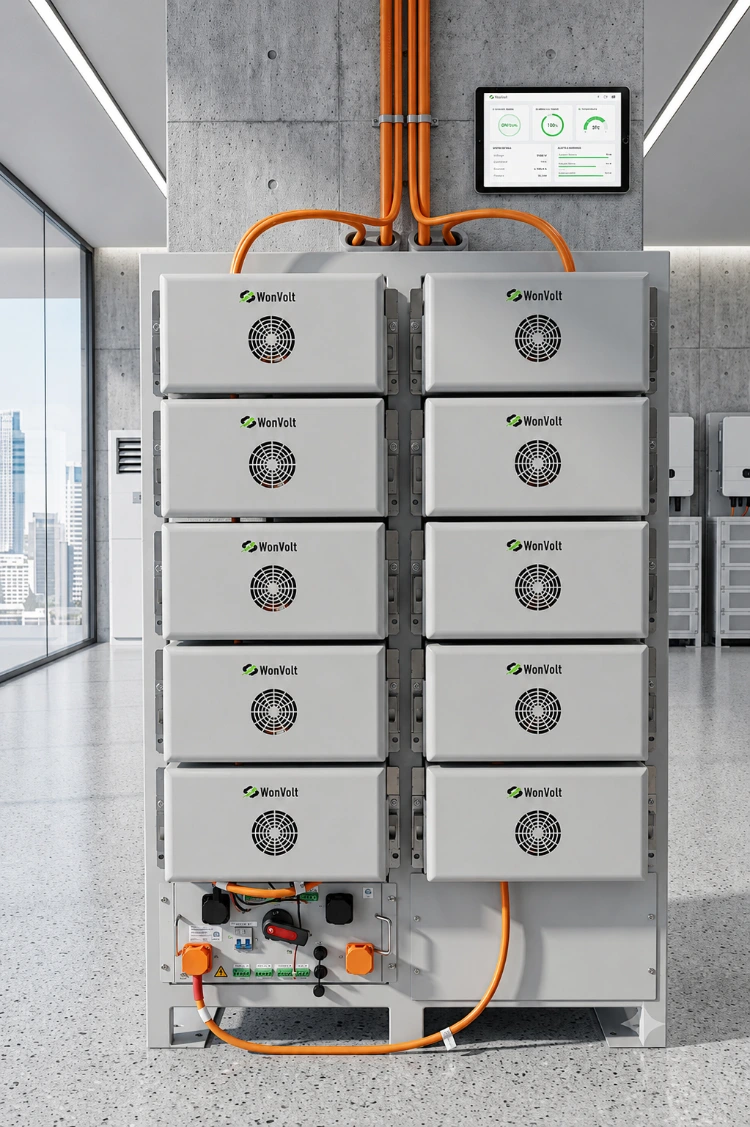
Battery performance is influenced by multiple factors, including charging and discharging conditions, depth of discharge, temperature, and manufacturing quality. Proper system planning helps reduce unnecessary stress on the battery and supports longer service life.
Consider Battery Operation Conditions
Factory environments may include temperature changes, dust, and continuous operating schedules. These conditions affect storage system performance.
When planning a commercial battery storage project, you should consider:
- Installation location
• Cooling requirements
• Safety management
• Maintenance access
• System monitoring capability
A suitable design should support reliable operation throughout the project lifecycle.
The Role of Professional Energy Storage Planning
A successful battery storage project requires more than selecting battery capacity. Engineering design, site conditions, electricity patterns, and future operating goals all influence the final solution.
Professional planning helps you evaluate the relationship between factory demand and storage performance before installation.
Improve Project Reliability Through Data Analysis
Load profile analysis reduces uncertainty during the design stage. It provides a clearer picture of how the system will operate after installation.
You can use load data to evaluate:
- Expected energy savings
• Battery operating frequency
• System utilization rate
• Expansion requirements
This allows you to make decisions based on actual electricity behavior instead of assumptions.
Create a Customized Storage Solution
Every factory has different energy characteristics. A storage system that works well for one facility may not match another facility with different production schedules.
WonVolt provides customized clean energy solutions and technical support for different project requirements. The company offers pre-sale engineering services, including site investigation before solution design, to help ensure that storage systems match customer requirements.
For larger applications, WonVolt also provides utility-scale energy storage solutions designed for broader energy management needs.
Conclusion
Factory load profiles are a critical tool for commercial battery storage planning. They help you understand electricity demand patterns, select suitable battery capacity, develop efficient charging and discharging strategies, and improve the overall value of your energy storage investment.
By combining accurate load analysis with professional system design, you can create a storage solution that fits your factory’s current needs while supporting future growth. A data-based approach makes commercial battery storage more predictable, efficient, and practical for industrial energy management.
FAQ
Q1: What Is a Factory Load Profile in Battery Storage Planning?
A: A factory load profile is a record of electricity consumption changes over time. It shows demand patterns and helps you design a battery storage system that matches actual energy usage.
Q2: Why Do Commercial Batteries Need Load Profile Data?
A: Load profile data helps determine battery capacity, power output, charging schedules, and discharge strategies. It reduces the risk of selecting a system that does not match factory operations.
Q3: How Does Load Profile Analysis Help Reduce Energy Costs?
A: It allows you to identify peak demand periods and use stored energy during those times. This can improve energy management and reduce dependence on high-demand electricity periods.
Q4: What Factors Affect Commercial Battery Storage Design?
A: Important factors include electricity consumption patterns, peak demand duration, installation conditions, temperature environment, battery capacity, and future expansion needs.
Q5: Can Battery Storage Work Together With Solar Power Systems?
A: Yes. Battery storage can store excess solar energy and provide electricity when solar generation is lower, helping factories improve renewable energy utilization.