



A 50kW hybrid solar power system works best when daytime loads, battery reserve, and inverter margin are sized as one operating pattern. The system is not only a solar array with storage attached; it is a load-management asset that must cover peaks, absorb PV output, and preserve backup energy when the grid becomes unstable. A useful design begins with the hourly load curve rather than the panel count.
Key Takeaways
- The daily load curve shows whether storage should serve peak shaving, backup, self-consumption, or all three.
- Battery capacity should be checked against usable depth of discharge and discharge power, not only kWh.
- Inverter margin protects motor starts, short peaks, and mixed AC load behavior.
- Site records should include grid outage pattern, tariff periods, roof space, and operating hours.
The Load Curve Decides the Storage Role
Solar generation rises in the middle of the day, while many commercial sites draw power in uneven blocks. Refrigeration, pumps, production tools, lighting, and office equipment create peaks that may not line up with PV output. Hybrid design becomes stable when the battery role is defined: store midday surplus, shave evening peak, or preserve reserve for outage periods.
Curtailment and storage value have already been linked in solar plus storage applications. The same principle applies at smaller commercial scale: stored energy is useful only when it is charged at the right time and discharged into the right load window.
Battery Reserve and Inverter Margin Should Be Calculated Together
A battery with enough energy can still disappoint if its discharge power is below the site’s short load peaks. The inverter must also handle motor starts and simultaneous loads without nuisance trips. Design should compare average kW, peak kW, expected backup duration, and the maximum single load that may start during backup operation.
| Design Variable | Question to Answer | Sizing Consequence |
| Daytime base load | How much load exists while PV is producing? | Defines direct self-consumption potential |
| Evening peak | Does demand rise after solar hours? | May justify battery discharge scheduling |
| Backup loads | Which circuits must run during grid failure? | Prevents oversizing for nonessential equipment |
| Surge load | Which motor or compressor starts first? | Sets inverter and protection margin |
Using a 50kW Package Without Treating It as a Fixed Recipe
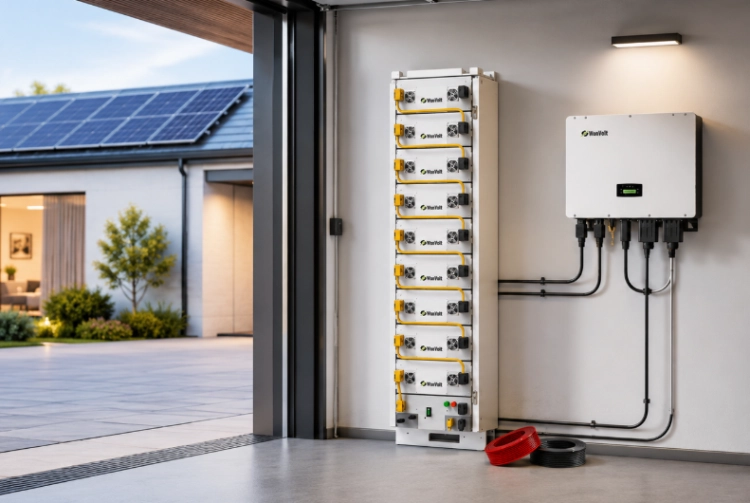
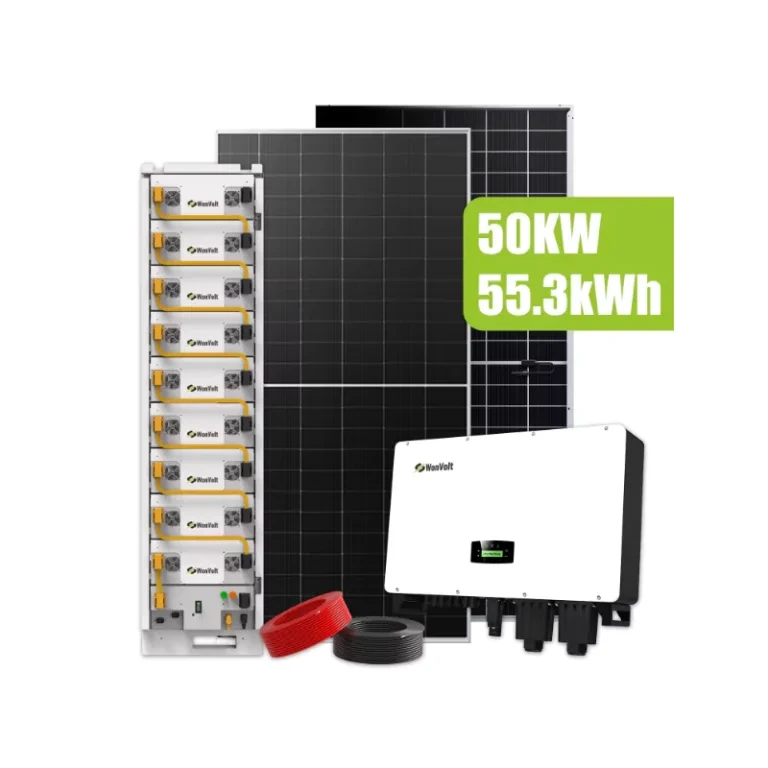
The 50kW 55.3kWh-100kWh Hybrid Solar Power System can support sites that need a defined hybrid package, but the order should still be built around the customer’s measured load data. WonVolt can discuss inverter selection, battery capacity range, installation environment, and product documentation when the site’s hourly profile is available.
A common mistake is to match PV power to the highest daytime number without checking how long that number lasts. Another is to reserve battery capacity for every load in the building, which often makes the system too large while still failing critical-load discipline.
A 50kW hybrid system is not the answer for every site. If the facility has very low daytime load, poor roof orientation, or no meaningful outage or tariff pressure, a smaller system or grid-tied-only design may deserve comparison before storage is added.
The Battery Should Be Scheduled Around Real Tariff and Outage Pressure
A hybrid system earns its keep only when the control strategy matches the site’s pain point. If demand charge is the issue, discharge should target the measured peak window. If outages are the issue, the battery must preserve enough state of charge before the risky period rather than emptying itself for small self-consumption gains.
The load record should cover at least a normal week and one stressful day if possible. A restaurant, farm, workshop, clinic, or warehouse may have different peaks on delivery days, production days, or hot afternoons. Those patterns change battery value more than a neat average figure.
The design file should show PV generation assumption, usable storage capacity, inverter continuous rating, surge margin, backup circuits, and charging logic. That makes the system reviewable by engineers, installers, and financial decision makers using the same numbers.
A Conservative Margin Can Be Cheaper Than a Corrective Visit
Motor starts and compressor loads deserve special attention because they can create short peaks above average demand. If the inverter is sized too tightly, a site may see trips during the exact moment backup power is needed. A small margin can prevent expensive call-backs and reputation damage.
Battery cycling should also be honest. A system that cycles deeply every day may deliver strong short-term savings but face a different lifetime cost from one used mainly for backup. The proposal should state the expected operating mode so warranty and replacement expectations are realistic.
Hybrid solar is strongest when the electrical room, roof, protection devices, and monitoring method are all ready for the system. When one of these is weak, the correct fix may be site preparation rather than a larger battery.
Before Energization, Confirm the Assumptions That Drive Runtime
The commissioning record for 50kW 55.3kWh-100kWh Hybrid Solar Power System should state the load boundary, expected operating mode, cable route, protection devices, communication status, and environmental condition. Those details make 50kW hybrid solar power system design measurable after the system is live.
A useful handover test includes normal operation, a controlled load change, an alarm or communication check, and a review of the reserve setting. The purpose is not to create an artificial failure; it is to confirm that the system responds in the same order the site team expects during a real event.
The final operating note should also explain what the system is not designed to do. Clear limits around heavy loads, expansion, temperature, moisture, and maintenance keep a technically sound installation from being used outside its intended range.
A Practical Acceptance Checklist Should Use Measured Loads
The final review for 50kW 55.3kWh-100kWh Hybrid Solar Power System should include a measured load snapshot rather than only an estimated capacity table. Even a short measurement window can reveal standby draw, short surges, and loads that were forgotten during the sales discussion. That evidence makes 50kW hybrid solar power system design easier to defend when the site is commissioned.
A second useful check is a controlled runtime test with the protected load group. The test does not need to drain the system completely; it should confirm that the inverter, BMS, protection devices, and monitoring interface respond normally under the load that matters most.
Documentation should remain readable for the person who maintains the system next year. Label photos, breaker references, battery model, inverter settings, warranty boundaries, and expansion notes should be stored together. That small file often prevents a simple service question from becoming a site revisit.
If the site expects future expansion, leave physical and electrical space for it now. Wall clearance, cable path, breaker capacity, communication ports, and cabinet arrangement should not be squeezed so tightly that the next battery requires reworking the first installation.
Repeat orders should not rely on the first sample alone. Keep a retained reference for 50kW 55.3kWh-100kWh Hybrid Solar Power System, record the accepted condition, and compare later batches against the same measurement or observation method. That habit keeps 50kW hybrid solar power system design stable when raw materials, operators, accessories, or logistics conditions change.
If a later order needs a different size, surface, capacity, route, formula, material, or installation condition, treat it as a controlled variation instead of a casual repeat. A short variation note protects the original approval while giving the new requirement enough attention to avoid hidden mismatch.
FAQ
How much battery capacity should a 50kW hybrid solar system use?
Capacity depends on the backup target, depth-of-discharge limit, discharge power, and how much solar energy is available for charging. The right figure comes from hourly load data rather than a fixed ratio.
Can a hybrid solar system reduce peak demand charges?
It can when the battery is scheduled to discharge during measured demand peaks. The financial result depends on tariff rules, peak duration, battery cycle cost, and control accuracy.
What information is needed before quoting a 50kW hybrid system?
Collect hourly or 15-minute load data, roof or ground space, grid outage history, tariff periods, protected-load list, installation photos, and local electrical requirements.
Final Selection Notes
A hybrid design is strongest when it follows the site’s operating rhythm. The solar power system catalog helps compare available system options, while the final specification should prove load matching, reserve discipline, and inverter margin before equipment is ordered.