



Voltage is not stored alone. Energy is stored in battery cells which are grouped into modules, racks or even clusters and which are operating at high direct current voltage. Such architecture reduces current for given power and thus allows for very efficient industrial power exchange. However, the negative impact of insulation faults, of loose contacts, of overheat as well as of control errors is greatly increased. Safe storage thus depends on the complete system, not only on the type of the battery cells.
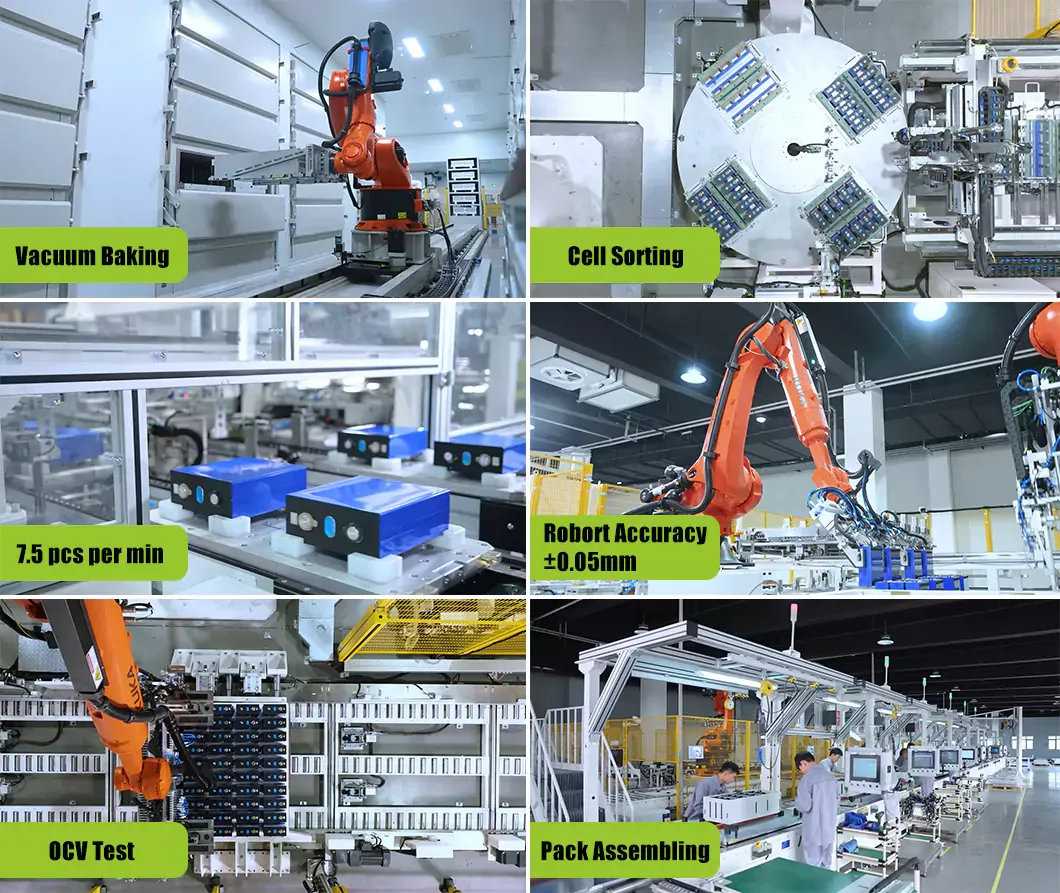
Founded in 2016, WonVolt develops industrial and commercial energy storage systems, containerized BESS solutions, lithium batteries, solar modules, and integrated clean energy projects. It has significant production capacity of lithium battery high voltage storage of 2.5 GWh and corresponding engineering support to conduct field investigation, system design, start up and commissioning, as well as provide corresponding technical training. High voltage storage systems need to be matched to the load profile, site conditions, inverter, cooling method, etc. and cannot simply follow a typical list of equipment with pre-determined specifications.
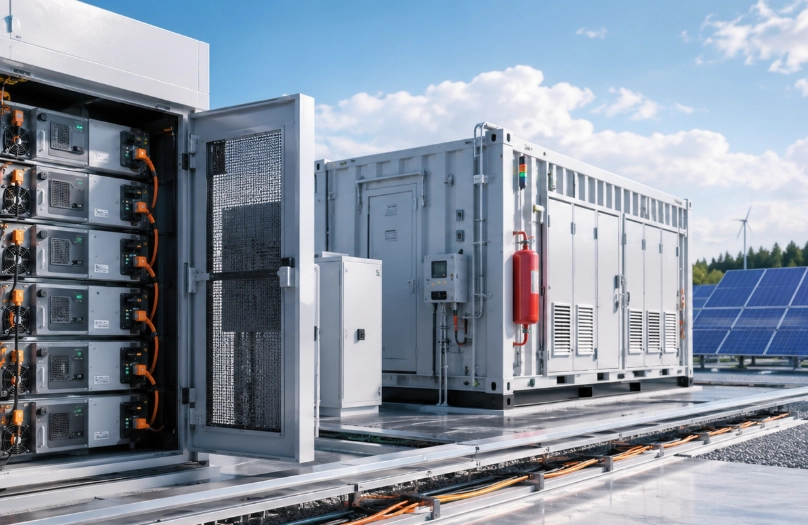
Rule 1 Choose the Right Chemistry and System Architecture
Your first safety decision happens before equipment reaches the site. Choose a battery chemistry, voltage, capacity, discharge rate, cooling method and enclosure that best fit your duty cycle. Oversizing increases cost and stored energy. Under sizing will cause your battery to be subjected to deeper discharge, higher current and more frequent cycles.
Use LFP Cells for Stationary Storage
Lithium iron phosphate cells are widely used in stationary storage because they combine long cycle life with strong thermal stability. Yet chemistry alone cannot prevent failure. You also need consistent cells, reliable formation and sorting, matched modules, and an architecture that limits the effect of a weak cluster.
A one cluster, one management design can isolate differences on the DC side, so one abnormal cluster does not create circulating current across the full system. For factories, hospitals, schools, supermarkets, and offices, a properly sized industrial and commercial energy storage solution can support peak shaving, backup power, and higher solar self-consumption without forcing one battery configuration into every project.
Rule 2 Keep State of Charge Within a Safe Window
A battery experiences more stress when it remains near full charge, reaches a very low state of charge, or cycles through a wider energy range than the application requires. A high state of charge also leaves more energy available during an internal fault. Your control strategy should therefore protect both safety and usable life instead of chasing the highest possible daily discharge.
Avoid Long Periods at Full Charge
Set charge and discharge limits according to the supplier manual, operating temperature, backup reserve, and expected cycle count. Do not treat 100 percent charge and maximum depth of discharge as default targets.
Note that although a capacity test can be conducted under a set of defined conditions such as a 25°C ambient temperature, 90% DOD, and 0.5C rate, it does not necessarily reflect the true operating conditions at a site, which can vary constantly. In addition, storage of equipment prior to installation should be in a location protected from fire, water, direct sunlight, high humidity, and temperatures above 35°C.
Rule 3 Use a BMS at Every Control Level
A high voltage battery cluster contains many cells connected in series. Small differences in voltage, temperature, internal resistance, or capacity can grow over time. Without active monitoring, one weak cell may reach its limit before the rest of the pack, even when the total pack voltage appears normal.
Monitor Cells, Modules, and Clusters
A battery management system should measure cell voltage, pack current, temperature, state of charge, and state of health. It should also balance cells, record alarms, control contactors, and exchange data with the energy management system and power conversion system. Protection logic must respond to overvoltage, undervoltage, overcurrent, overtemperature, and insulation faults before normal aging becomes a serious event.
For medium industrial projects, the 100-261kWh Lithium Battery Cluster 51.2V 314Ah provides a scalable high voltage storage option based on 51.2V 314Ah modules. It uses LFP cells, smart BMS control, and 0.5C discharge capability, making it suitable for projects that need flexible capacity and controlled power delivery.
The final configuration should still be checked against the inverter voltage window, communication protocols, load profile, and local site conditions. A compatible system reduces communication failures, unexpected shutdowns, and unsafe charge or discharge commands.
Rule 4 Control Temperature and Airflow
Heat accelerates battery aging and can start side reactions inside a damaged or overstressed cell. The risk grows when heat generation becomes faster than heat dissipation. A safe design must control average temperature and the temperature difference across cells because one hidden hot spot may age much faster than the rest of the rack.
Prevent Hot Spots before They Spread
Choose smart air cooling or liquid cooling according to energy density, ambient climate, enclosure size, and discharge rate. Place temperature sensors where they can detect uneven cooling, blocked airflow, pump faults, or abnormal cell behavior.
During maintenance, check coolant level and clarity, pipe joints, circulation pumps, radiators, filters, fans, and cabinet seals. The BMS temperature map should also be reviewed for areas that remain consistently warmer than nearby modules. Never force charging or discharging while the battery reports high temperature or a cooling fault.
Rule 5 Protect Every Electrical Boundary
High voltage failure often begins outside the cell. Incorrect cable sizing, loose terminals, poor insulation, incompatible equipment, missing grounding, and uncontrolled short circuit current can create local heating or dangerous touch voltage. Safety must cover every boundary between the battery, DC cabinet, inverter, transformer, and grid connection.
Separate Faults Instead of Sharing Them
Use rated breakers, fuses, contactors, isolation, SPD, emergency stops and insulation monitoring devices. Verify the correct polarity before power up and keep positive and negative cables physically protected.
Do not mix different battery module types in one system or connect an unverified inverter. A qualified installer should follow the approved wiring design, torque requirements, commissioning sequence, and communication settings. Unauthorized modifications can remove the coordination between electrical protection and BMS control.
Rule 6 Build Multiple Fire Protection Layers
No single sensor or extinguisher can provide complete protection. A robust high voltage storage system needs prevention, early detection, automatic shutdown, containment, ventilation, and suppression. The goal is to stop an abnormal cell from becoming a module event and stop a module event from spreading through the cabinet or container.
Detect Heat, Smoke, and Gas Early
Combine cell temperature monitoring with smoke detection, cabinet alarms, exhaust control, fire resistant separation, and automatic suppression. Install the system in a ventilated area away from combustible materials, water exposure, conductive dust, salt mist, and corrosive gas.
For larger projects, a utility-scale BESS solution can integrate batteries, inverters, climate control, monitoring, smoke and temperature sensing, automatic fire suppression, and exhaust functions in one containerized platform. High integration does not remove the need for site planning. Access routes, equipment spacing, drainage, emergency isolation, and maintenance clearance must remain part of the design.
Rule 7 Inspect, Record, and Service the System
Commissioning does not finish the safety process. Battery condition changes with cycles, temperature, calendar age, operating current, and environmental exposure. Regular inspection lets you identify rising resistance, voltage imbalance, cooling loss, corrosion, or repeated alarms before they cause downtime.
Turn Operating Data into Preventive Maintenance
Check cabinets for deformation, rust, water entry, damaged seals, loose cables, leaking coolant, abnormal noise, and overheating. Review cell voltage spread, temperature distribution, insulation resistance, state of health, alarm history, and charge and discharge trends.
Keep an operation log and compare current data with the commissioning baseline. A slow rise in temperature difference or cell voltage deviation may reveal a developing problem before the system reaches an alarm threshold. Firmware updates should come from authorized technical support, and live electrical work should be avoided.
Safe high voltage storage is a coordination problem. Chemistry, BMS logic, thermal design, electrical protection, fire response, and maintenance must operate as one system. Before selecting capacity or finalizing a layout, use the clean energy solution overview to compare application paths, then contact the engineering team for site-specific design, commissioning, and training support.
FAQ
Q1: What Is the Safest Battery Chemistry for High Voltage Energy Storage?
A: LFP is widely chosen for stationary storage because of its thermal stability and cycle performance, but safe operation still requires a BMS, temperature control, electrical isolation, and fire protection.
Q2: Should a High Voltage Battery Stay Fully Charged?
A: Not continuously. Keeping reserve energy may support backup power, but long periods at full charge can increase stress. Set the operating window around your load profile, temperature, and supplier limits.
Q3: What Does a BMS Monitor in a High Voltage Battery?
A: It monitors voltage, current, temperature, state of charge, and state of health. It also balances cells, controls protection devices, records faults, and communicates with other system controllers.
Q4: How Often Should a Commercial Battery System Be Inspected?
A: Remote data should be reviewed continuously, while physical inspections should follow the site risk level and maintenance plan. Repeated alarms, abnormal heat, voltage imbalance, leakage, or damaged seals require immediate action.
Q5: Can High Voltage Storage Be Installed Outdoors?
A: Yes, when the enclosure, cooling, sealing, corrosion protection, drainage, ventilation, fire controls, and operating temperature range suit the site. WonVolt can match these factors through project-specific engineering.