



Solar panels are great at catching sunlight during the day, but the real game-changer happens when you can keep that power for evenings, cloudy spells, or even full grid outages. That’s where solar energy storage comes in. At WonVolt, we’ve spent the last eight years building complete clean-energy packages – high-output panels plus smart battery systems that actually work together in the real world. We ship to more than 90 countries, so we’ve seen what holds up from desert heat in the Middle East to freezing winters in Northern Europe.
Today we’ll walk you through the exact questions our project teams ask customers every week. Answer them honestly and you’ll end up with a storage setup that won’t let you down.

What Are Your Primary Energy Requirements?
Everyone starts in a different place. A family home in California might just want to knock $150 off the monthly bill and have lights during summer blackouts. A factory in Germany could be looking to shave peak tariffs and run night shifts on stored solar. Get this wrong and you’ll either overspend on capacity you never use or run out of juice at the worst possible moment.
Daily Consumption Patterns
Pull last year’s bills or install a cheap energy monitor for a couple of weeks. Write down how many kWh you use on a normal day and on your heaviest day. That spread tells us everything. Most homes sit between 15-35 kWh per day; commercial sites often jump past 500 kWh.
Peak Shaving and Backup Needs
Do you care more about cutting the 6 pm spike when everyone fires up the AC, or do you need four solid hours of backup if the grid drops? The first case needs a smaller battery with fast discharge; the second wants deeper capacity even if it costs a bit more up front.
Scalability for Future Expansion
Kids moving out? Adding an EV charger next year? Pick a system that lets you bolt on another battery pack later without replacing the whole inverter. WonVolt’s containerized BESS units and residential stackable packs were designed exactly for that – just slide in another module and you’re done.
Once you have those numbers on paper, battery chemistry suddenly becomes much easier to talk about.
Which Battery Chemistry Offers Optimal Performance?
Not all batteries are created equal, and that’s fine – different jobs need different tools. We mainly use lithium iron phosphate (LFP) cells in our liquid-cooled and air-cooled packs because they hit the sweet spot for 95 % of the projects we see.
Lithium-Ion Efficiency in WonVolt BESS
Round-trip efficiency above 94 %, 6000+ cycles at 80 % depth of discharge, and almost no fire risk when you pair them with proper liquid cooling. That’s what you get inside every WonVolt industrial container and residential wall unit.
Safety Features of Liquid-Cooling Systems
Heat is the enemy of batteries. Our liquid-cooled packs keep every cell within two degrees of each other, even when you’re pulling 300 kW for hours. Less heat means slower aging and far fewer headaches down the road.
Compatibility with N-Type TOPCon Panels
Our latest panels – like the 630 W bifacial 210R cell (WV-66KUN630-H12RS) and the 600 W 72-cell (WV-72KUN605-H8NS) – run higher voltage strings. The inverters inside our storage systems were built from day one to handle those 1500 V strings without extra equipment.
The next piece people often overlook is how smoothly panels, inverter, and battery actually talk to each other.
How Does Integration Impact System Reliability?
A chain is only as strong as its weakest link. We’ve lost count of projects where someone mixed random brands and spent months chasing weird fault codes. When everything comes from the same factory floor, things just work.
Pairing with 630 W Bifacial WV-66KUN630-H12RS
Put these rectangles on a ground-mount or flat commercial roof and the backside alone can add another 20 % yearly yield. Feed that into a WonVolt 100-215 kWh containerized BESS and you’re looking at serious grid independence for mid-size factories or agri-businesses.
Residential 3-30 kW Solutions for Hybrid Setups
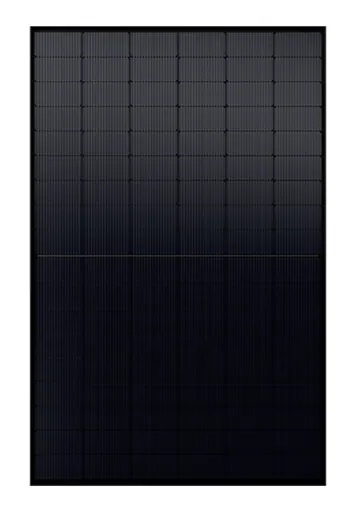
For rooftops we usually suggest the full-black 450 W panel (WV-54JWU450-H8NS). Looks sharp on European tiles, still pumps out real power, and plays perfectly with our 5-30 kWh stackable home batteries. One app, one warranty, zero drama.
Industrial 50-300 kW for Commercial Demands
Bigger sites get our 2.5 GWh annual production muscle. Liquid-cooled packs, outdoor-rated containers, and remote monitoring that actually alerts you before something fails – not after.
What Certifications Ensure Long-Term Durability?
Anybody can print a fancy datasheet. We back ours with third-party stamps that actually mean something.
12-Year Product and 30-Year Power Warranties
Every panel leaves the line with a 12-year material and workmanship promise, plus a 30-year linear output warranty that still delivers at least 87.4 % at year 30. Batteries follow the same logic – 10 years at 70 % retained capacity, no excuses.
CE and TUV Compliance Standards
Full CE marking on the residential batteries, TUV-SÜD certificates on the modules. Installers in strict markets like Germany or Australia sleep better when they see those logos.
Proven Performance in 90+ Countries
From scorching Qatar summers to Norwegian winters at minus 30 – the same panels and batteries keep running. Real-world proof beats lab numbers every time.
How to Maximize Return on Investment?
Nobody buys solar storage for fun; we buy it to save money and gain independence.
Cost-Effective Pairing with 450 W Full Black WV-54JWU450-H8NS
Homeowners love the clean look and the fact that six or seven of these panels plus a 10-15 kWh battery usually cover 100 % of an average European household bill. Payback in 5-7 years is common now.
Energy Yield from Bifacial Technology
On a typical ground mount with 20 % albedo, our 600 W and 630 W bifacials easily push past 750 W real-world peak. That extra juice goes straight into your battery instead of getting clipped or sold back for peanuts.
WonVolt’s One-Stop Clean Energy Support
Pre-sale site survey, custom layout, commissioning, and training – all included. You’re not buying boxes; you’re buying a partner that sticks around after the containers are unloaded.
Conclusion
Picking the right solar energy storage system doesn’t have to be complicated. Figure out how much power you really use, decide what chemistry and size make sense, and then choose a supplier whose panels and batteries are designed to live together for decades.
At WonVolt we build everything under one roof in Hefei – N-type TOPCon and bifacial panels, liquid-cooled industrial packs, neat residential wall units. One phone call or email and our engineers will run the numbers for your exact roof or field. Drop us a message at https://www.wonvolt.com/ and let’s get your project moving.
FAQ
Q1: How long do WonVolt batteries really last in daily cycling?
A: Most residential packs still hold over 75 % capacity after 7000 cycles when used between 20-80 % state of charge. That’s 15-20 years for typical home use.
Q2: Can I start small and add more storage later?
A: Yes – both our home batteries and industrial containers are fully modular. Add another 5 kWh pack or another 215 kWh container whenever you’re ready.
Q3: Do the bifacial panels need special mounting to get the extra gain?
A: Just normal clearance from the ground or roof – 0.8-1 m is usually enough. White gravel or reflective paint under the array helps, but even regular soil gives you 8-12 % extra most of the year.