



A solar plant may generate more electricity at midday than the grid or local load can accept. Battery storage lets you shift this energy to later demand, smooth power fluctuations, reduce solar curtailment, and support grid stability. The key design question is where the batteries should be installed. Should you choose a factory-built BESS container or construct a dedicated battery building?
WonVolt develops solar and energy storage solutions for industrial, commercial, and utility scale projects. Founded in 2016, the company has 1.2 GW of solar module capacity and 2.5 GWh of lithium battery capacity. Its support includes site investigation, system design, commissioning, and technical training. The right enclosure depends on your plant size, climate, grid connection, operating schedule, and expansion plan.
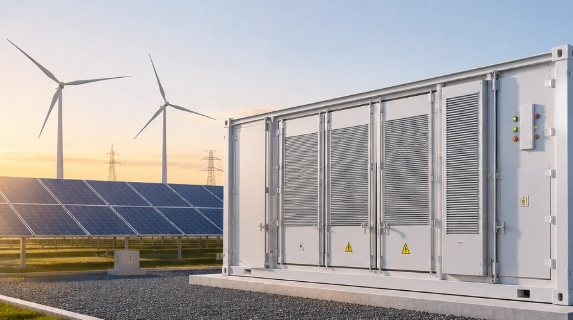
What Is the Difference between a BESS Container and a Battery Building?
Both options can use lithium iron phosphate batteries, a battery management system, a power conversion system, an energy management system, temperature control, and fire protection. The difference lies in how these systems are packaged, tested, installed, and maintained.
BESS Container
A BESS container is a prefabricated enclosure that can integrate battery racks, electrical protection, inverter equipment, cooling, fire suppression, ventilation, monitoring, and communications. Much of the assembly and testing happens before shipment, reducing the number of interfaces that must be completed at the solar plant.
Integrated systems normally divide the enclosure into battery and electrical sections. The battery area contains battery modules, cooling, ventilation, and fire protection. The electrical area can contain PCS equipment, distribution devices, contactors, breakers, and communication hardware.
Battery Building
A battery building is a permanent structure designed around the storage system. Batteries, electrical rooms, cooling equipment, fire zones, cable routes, and access corridors are installed as part of a custom construction project.
You gain more freedom to arrange service space and equipment, but you must coordinate more civil, electrical, mechanical, safety, and software work. Any design change can affect several contractors and extend the construction schedule.
Which Option Is Faster and Easier to Install?
Schedule risk can affect project returns as much as equipment price. A delayed storage system may leave solar energy unused and postpone revenue from energy shifting or grid services.
Factory Integration Reduces Site Work
A container solution usually reaches the site with its main subsystems already integrated. Your contractor still needs foundations, transformers, switchgear, grounding, cable routes, communications, and commissioning, but fewer components must be assembled outdoors.
The utility scale BESS solution is designed for 1 MW to 5 MW solar plants. It combines batteries, inverter equipment, air conditioning, safety protection, and monitoring in a containerized platform. Its core features include temperature control, automatic fire suppression, exhaust, high integration, and project customization.
This repeatable architecture also helps when you plan several installation phases. Each container can follow the same foundation, electrical interface, communication protocol, and commissioning process.
Battery Buildings Need More Coordination
A building requires structural work, waterproofing, drainage, ventilation, fire separation, emergency exits, lighting, and cable management before final equipment installation.
This approach may suit an unusual site or highly customized system, but it normally creates a longer design and construction path. Work quality also depends on several contractors completing connected tasks correctly.
Which Design Provides Better Safety and Battery Life?
Neither format is automatically safer. Performance depends on cell quality, fault isolation, electrical protection, temperature uniformity, control logic, installation quality, and maintenance.
Battery aging is also affected by temperature, depth of discharge, charge and discharge rate, manufacturing quality, and cell consistency. One weak cell can reduce the performance and usable life of an entire battery pack.
Integrated Protection in a Container
A strong container design monitors the battery at cell, module, rack, and system levels. The BMS tracks voltage, current, temperature, state of charge, and state of health. It can also balance cells and prevent overcharging, overdischarging, and unsafe temperature conditions.
The EMS coordinates the solar plant, batteries, PCS, grid, and loads. The PCS manages bidirectional power conversion, charging batteries when excess solar power is available and releasing energy when the plant or grid needs it.
Smoke and temperature sensing, automatic suppression, exhaust, emergency shutdown, and compartment isolation help limit fault propagation. Factory testing can verify alarms, communications, cooling, and protection before shipment.
You must still provide suitable container spacing, emergency access, drainage, grounding, surge protection, and a site response plan.
Flexible Protection in a Building
A battery building can offer wider service corridors, custom fire compartments, larger ventilation systems, and dedicated electrical rooms. This may help when you have permanent operators or unusual safety requirements.
The main risk is integration. Protection depends on correct sealing, cable firestopping, airflow, alarm logic, fire zoning, and communication between equipment installed by different contractors. More space does not compensate for weak coordination.
Temperature Control Shapes Service Life
A container has a defined thermal envelope, so air or liquid cooling can match a repeatable battery rack layout. Sensors can identify hot spots, fan failures, pump faults, blocked filters, or uneven temperature distribution.
Liquid cooling is especially useful when high energy density requires tighter temperature control. Your maintenance plan should cover coolant condition, pipe joints, pumps, radiators, filters, insulation resistance, cell voltage spread, and BMS temperature data.
A building provides more room for large HVAC equipment and future cooling upgrades. However, long air paths, mixed rack layouts, and large open areas can create temperature dead zones unless airflow is carefully designed.
Which Option Is Better for Expansion and Maintenance?
Your solar plant may add PV capacity, increase storage duration, or change its dispatch strategy after commissioning. The enclosure should support these changes without causing a major shutdown.
Modular Growth with Containers
Containers work well when expansion follows a block design. You can add another battery container, PCS block, transformer, and communication node as demand grows. This supports phased investment and limits the area affected during maintenance.
The PoseidonVolt 2.0 BESS Container up to 5MWh is the recommended solution for large solar plants that need high capacity in a compact, modular format. It can combine battery storage, power conversion, thermal management, fire protection, monitoring, and customized project interfaces.
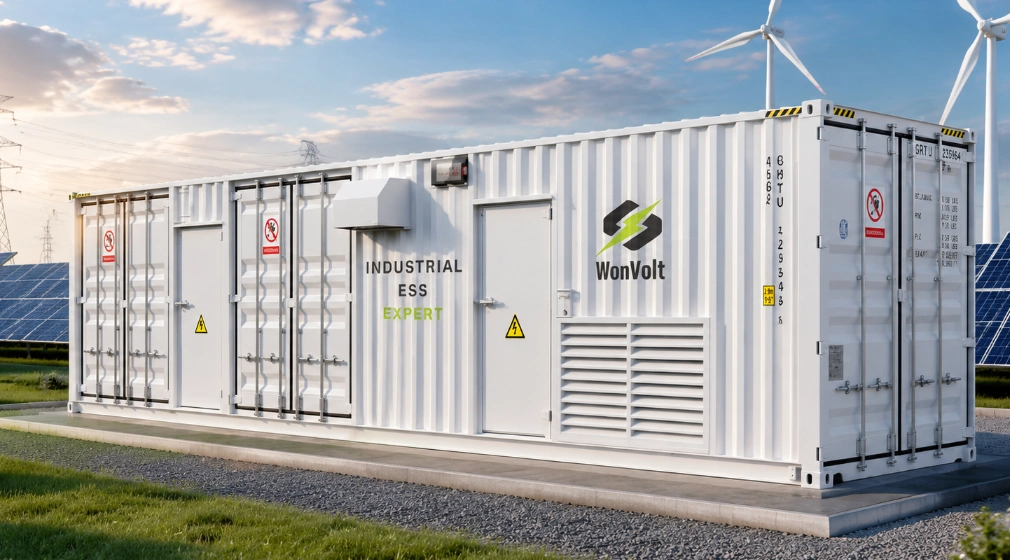
Its capacity also allows you to reduce the number of separate enclosures needed for a large project. Final configuration should still match your storage duration, PCS rating, grid voltage, charge and discharge rate, climate, and available site space. The model name and updated capacity are listed in the supplied WonVolt product list.
Centralized Access in a Building
A building can provide indoor workshops, lifting space, spare-parts storage, and shared cooling equipment. It may suit a very large plant with a permanent maintenance team.
Expansion becomes harder if the original footprint, fire zones, ventilation capacity, cable routes, or electrical rooms leave little spare capacity. Enlarging an operating building may also interrupt more equipment than adding another independent container.
Which Option Has the Lower Total Cost?
You should compare complete installed cost rather than battery price alone. Include engineering, foundations, shipping, construction, transformers, cabling, commissioning, auxiliary power, maintenance, downtime, expansion, and replacement.
Container Cost Advantages
Factory prefabrication can reduce site labor, simplify commissioning, and standardize spare parts. A container also supports repeatable design across several project phases.
Transport limits, crane access, foundations, container spacing, cable distance, and transformer placement still affect the final budget. A cheap container with poor site integration may cost more after installation problems appear.
Building Cost Advantages
A battery building may justify higher civil and engineering costs when the site needs protected indoor maintenance, custom equipment access, large shared utilities, or a centralized long-term layout.
It becomes expensive when the building is oversized before the operating plan is clear. You may pay for unused floor area, excess HVAC capacity, and infrastructure that does not improve storage revenue.
Your revenue model should guide the choice. Solar shifting needs enough energy capacity to move midday output into the target delivery period. Ramp control and grid support may depend more on PCS power and response. Backup operation also requires reserve capacity, islanding logic, and load priorities.
You can compare the wider solar and BESS solution range when matching storage with PV capacity, grid voltage, and operating goals. Smaller behind-the-meter projects may suit an industrial and commercial solution, while multi-megawatt solar plants usually benefit from modular utility scale architecture.
So Which Is Better for Your Solar Plant?
For most 1 MW to 5 MW solar plants, a BESS container is the stronger starting point. It offers faster deployment, factory integration, modular expansion, a compact footprint, and repeatable protection. It is especially practical when you want phased construction or several standardized storage blocks.
A battery building is more suitable when your site requires a permanent indoor operating area, special fire compartments, highly customized maintenance access, or a centralized system designed for long-term expansion.
Before making the final choice, define the required power, storage duration, daily cycles, climate, grid services, site space, maintenance model, and future capacity. Then compare complete designs rather than enclosure prices.
For a project-specific layout, equipment configuration, and commissioning plan, contact WonVolt with your solar capacity, load profile, grid voltage, and target storage duration.
FAQ
Q1: Is a BESS Container Cheaper Than a Battery Building?
A: It is often cheaper to install because more assembly and testing happen in the factory. Final cost still depends on transport, foundations, transformers, cables, construction, and grid connection.
Q2: How Long Does a Containerized Battery System Last?
A: Service life depends on cell chemistry, temperature, depth of discharge, charge rate, cell consistency, and maintenance. Stable thermal control and a suitable operating window help preserve usable capacity.
Q3: Can You Expand a BESS Container after Commissioning?
A: Yes. You can add more containers, PCS units, transformers, and control nodes if the electrical design and site layout reserve space for expansion.
Q4: Does a Battery Building Provide Better Fire Safety?
A: Not automatically. A building offers more room for fire zones, but safety still depends on detection, suppression, ventilation, electrical isolation, and correct system integration.
Q5: Which Option Is Better for a Large Solar Plant?
A: A modular BESS container is usually better for fast deployment and phased growth. A battery building may be preferable when the project needs custom indoor access, centralized maintenance, or unusual site requirements.