



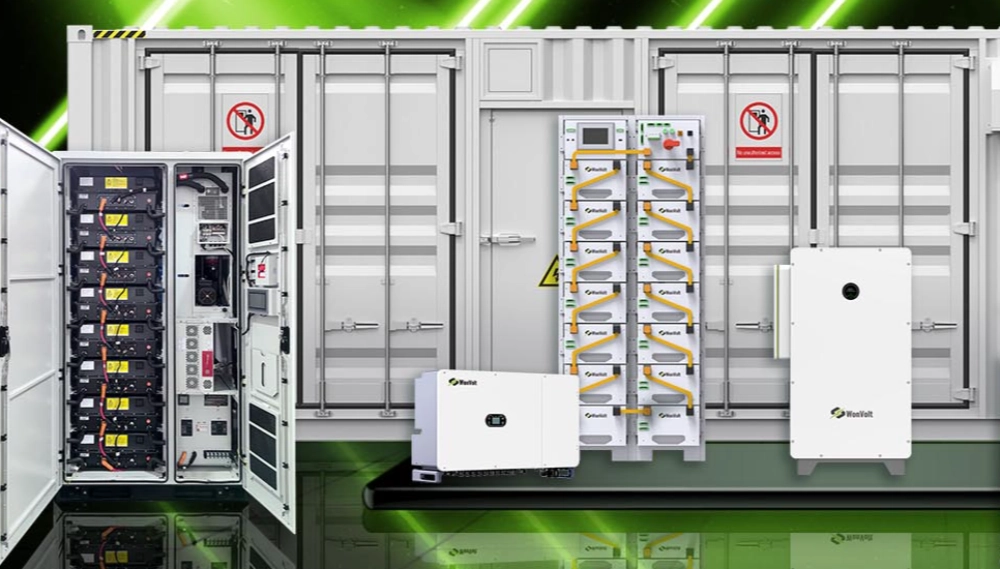
A 5MWh BESS container can reduce grid connection pressure by absorbing renewable output when export is constrained and discharging when the grid can accept power or when project output needs support. The result depends on the PCS rating, dispatch strategy, interconnection limit, system losses, and operating reserve – not on the 5MWh label alone.
WonVolt positions the PoseidonVolt 2.0 container as a utility-scale storage direction of up to 5MWh. Its wider architecture includes lithium battery clusters and bidirectional PCS equipment, allowing developers and EPC contractors to configure energy and power around the grid study.
What Grid Constraint Is the BESS Expected to Solve?
Grid connection pressure can mean several different things: an export ceiling, transformer overload, ramp-rate limits, renewable curtailment, voltage sensitivity, or a requirement to provide scheduled power. Each problem requires a different control objective. The project team should state the limiting condition in measurable terms before selecting the container quantity.
| Grid Issue | Required BESS Action | Primary Sizing Driver |
| Export limit | Charge above the permitted export level | Surplus energy duration and charge power |
| Evening delivery | Shift daytime renewable energy | Energy capacity and round-trip losses |
| Ramp control | Absorb or supply rapid changes | PCS response and power rating |
| Transformer congestion | Hold site import/export below limit | Peak duration and metering response |
| Grid support reserve | Maintain headroom for commands | State-of-charge window and availability |
A single project may combine several duties, but control priority must be clear. For example, a battery kept nearly full for backup has less room to absorb solar curtailment. Revenue stacking is credible only when the same state of charge can support the promised services at the required time.
How Should 5MWh Be Translated Into a Bankable Design?
Separate Nameplate Energy From Deliverable Energy
Deliverable energy is reduced by operating reserve, depth-of-discharge limits, temperature, degradation, auxiliary loads, PCS losses, and transformer losses. Financial models should use energy at the point of interconnection, not only battery-cell capacity. This distinction becomes material when guaranteed dispatch is measured at the grid meter.
Define the PCS Power-to-Energy Ratio
A 5MWh system paired with 1MW of PCS can discharge for roughly five hours before losses and reserve are considered; the same energy paired with 2.5MW serves a shorter, higher-power duty. The correct ratio follows the grid event duration, not a standard container label.
Model Degradation Against the Dispatch Plan
Cycle depth, average state of charge, temperature, and calendar time all affect available energy. The model should show how many cycles are expected, what reserve is maintained, and whether augmentation will be needed to meet a long-term capacity guarantee.
Include Auxiliary Consumption
Cooling, control power, fire systems, pumps, and standby loads consume energy. In hot and humid environments, auxiliary consumption can be significant. It should be included in both the energy yield model and the site transformer load calculation.
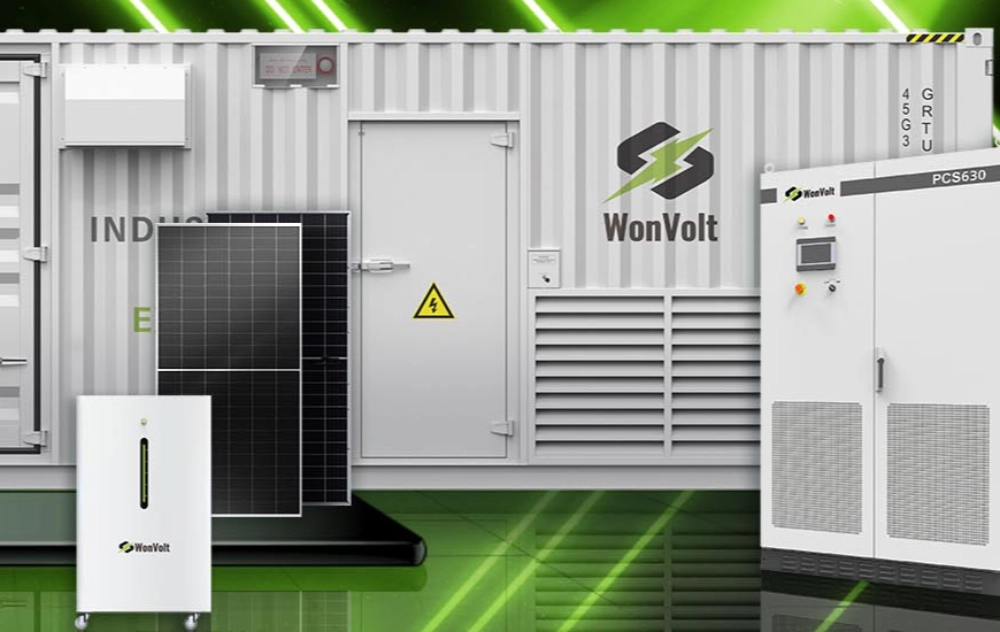
Where Can a Containerized BESS Reduce Connection Pressure?
Solar Farms With Midday Curtailment
The BESS charges when PV output would exceed the export limit, then discharges later within the interconnection capacity. Successful sizing requires the historical or simulated curtailment curve. A battery designed from annual curtailed MWh alone may miss the highest hourly charging requirement.
Wind Projects With Variable Ramps
Fast PCS response can smooth short output changes, while the energy capacity covers longer ramps. Control deadbands are important: excessive small corrections can increase cycling without materially improving grid compliance.
Industrial Microgrids Near Transformer Limits
A containerized system can support large motors, production peaks, or renewable integration without immediately increasing the grid connection. Protection coordination and islanding rules must be defined carefully because the microgrid includes both load and generation.
Grid-Side Pilots and Capacity Support
For grid-side applications, dispatch authority, metering, communication redundancy, availability targets, and response testing become central. The BESS must be engineered as grid equipment, with clear interfaces between the owner, operator, EPC contractor, and system supplier.
What Container Integration Details Need Early Decisions?
- Battery cluster arrangement, DC combiner design, and isolation points.
- PCS quantity, redundancy philosophy, and transformer connection.
- Cooling design for local ambient temperature and humidity.
- Fire detection, suppression, gas management, and emergency response interface.
- Container access, maintenance aisles, lifting, and replacement route.
- SCADA, EMS, meter, protection relay, and utility communication protocols.
- Noise, drainage, corrosion protection, and site civil requirements.
The referenced battery-cluster architecture uses 51.2 V, 280 Ah modules in larger system configurations. The detailed DC arrangement should be confirmed with the container and PCS design so that voltage range, fault current, cable length, and maintenance isolation are coordinated.
How Should the EPC Team Test the System?
Factory and site acceptance tests should verify charge and discharge power, usable energy, meter accuracy, state-of-charge control, response time, communication failure behavior, auxiliary load, emergency shutdown, fire-system interfaces, and recovery after a grid trip. Tests should use the same point of measurement defined in the performance guarantee.
Dispatch scenarios should include full power near high and low state of charge, rapid setpoint changes, blocked charging during a grid constraint, and loss of one PCS or battery string where redundancy is claimed. These cases reveal integration weaknesses before commercial operation.
What Commercial Mistakes Should Developers Avoid?
The first mistake is comparing containers only by MWh. Two offers may differ in PCS scope, transformer, EMS, fire system, cooling, degradation allowance, installation, commissioning, and warranty conditions. A normalized scope sheet is essential.
The second mistake is building the financial case around perfect daily dispatch. Curtailment, price spreads, maintenance, grid commands, and state-of-charge conflicts reduce theoretical revenue. A conservative model with sensitivity cases gives a more defensible project.
Conclusion
A 5MWh BESS can ease grid connection pressure when its energy, power, controls, and operating reserve are designed for a specific constraint. Containerization simplifies deployment, but it does not remove the need for grid studies and detailed integration.
Developers reviewing WonVolt utility-scale solutions should provide the interconnection limit, renewable profile, dispatch objective, site conditions, and required guarantees so the system can be configured around measurable performance.
FAQ
Q1: Is a 5MWh Container Always a Five-Hour System?
A: No. Duration depends on the PCS power rating and usable energy. A 1MW PCS suggests about five hours before losses and reserve, while a higher-power PCS gives a shorter duration.
Q2: Can BESS Eliminate Renewable Curtailment?
A: It can reduce curtailment when charge power and available capacity match the surplus profile. Long or repeated curtailment events may exceed the battery’s available energy window.
Q3: Where Should Usable Energy Be Measured?
A: The contract should state whether energy is measured at the battery DC bus, PCS AC output, transformer, or grid point of connection. Grid-delivered energy is lower because of losses and auxiliary loads.
Q4: Why Is State-of-Charge Reserve Needed?
A: Reserve provides headroom for grid commands, protects operating limits, and supports backup or contingency duties. Using the full battery for one service can make another service unavailable.
Q5: What Information Is Needed for a Preliminary Design?
A: Share the renewable profile, grid export or import limit, required power and duration, ambient conditions, single-line diagram, site layout, dispatch rules, and target performance guarantees.