



The difficult part of buying a solar battery often comes after the quotations arrive. One supplier prices a larger pack; another offers a cheaper one. Neither has explained what happens when the site’s pump starts during an outage.
Without knowing what the battery has to run, neither quote tells you much. An extra few kilowatt-hours won’t help if the inverter trips when a pump starts. Paying for that extra capacity also makes little sense if the solar array rarely has enough surplus to charge it.
Choosing the best battery for a solar energy system takes a little work before the price comparison. Here’s how to turn a broad request for “solar storage” into a specification a supplier can actually check.
Start with the job the battery must perform
First, agree on which circuits must remain online during an outage. For example, refrigeration and communications may be essential, while less critical equipment can wait for grid power to return. Each additional circuit adds to the energy requirement and may also increase the peak power demand. The site operator should sign off on this list before sizing begins.
For every protected load, record its running power, starting power and expected operating time. Keep motor starting demand separate from everyday energy consumption. Otherwise, a fairly small daily energy figure can conceal a brief but demanding start-up event.
A battery used for more than one purpose also needs a clear reserve policy. Energy spent reducing an evening peak is no longer available for backup if the grid fails later. At an off-grid site, there may be no utility supply to fall back on. Specify the minimum reserve and decide which loads or functions take priority when stored energy runs low.
Compare usable energy, not just the label
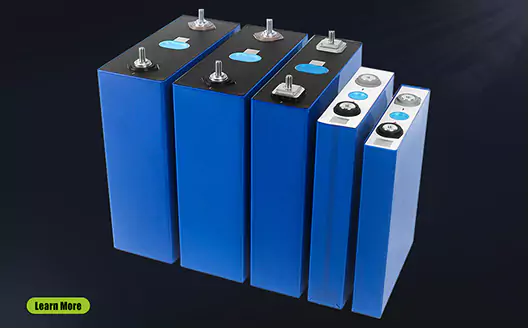
The kWh printed on a battery label is not the same as the energy available to the loads. Some capacity is held back by the permitted depth of discharge (DoD), and further energy is lost during conversion. For backup planning, use the expected usable output rather than the headline capacity.
For a first estimate, use:
Required nominal battery energy ≈ energy to be shifted or backed up ÷ target usable fraction ÷ system efficiency
Suppose the protected equipment needs 8 kWh. If the design assumes a usable fraction of 0.9 and system efficiency of 0.9, the estimate is about 9.9 kWh of nominal storage. These are illustrative assumptions, not measured WonVolt performance figures. The final calculation should use the proposed equipment’s losses, temperature conditions and reserve requirement.
For solar self-consumption, look at when surplus electricity is actually available. A building might generate plenty of solar energy over a day but use most of it immediately. In that case, the export profile tells you more about charging opportunities than the generation total alone.
When comparing offers, ask each supplier to show usable kWh, the DoD limit and the test or operating conditions behind the figure. Without those details, a battery with a higher nominal rating may appear better even though the two capacities were calculated on different bases.
Check power separately from energy
Now return to the pump on the load list. It may consume relatively little energy over a day, but starting it could require the highest instantaneous output of any protected load.
Ask for the inverter’s continuous power rating, allowable surge power and the length of time that surge can be delivered. A surge figure without a duration does not establish whether the pump will start reliably. Battery output and inverter capability must be checked together; buying a higher-output battery will not overcome an inverter’s limits.
For a commercial site, timing is part of the calculation. A brief demand spike and a peak lasting several hours call for very different amounts of stored energy. You also need to know whether the battery can recharge before the next peak. WonVolt describes backup, peak shaving and self-consumption as functions of its industrial and commercial solution. Ask the supplier to show how the battery, PCS and control settings will handle the site’s actual schedule.
Look beyond chemistry when checking safety
LiFePO4 chemistry is one useful specification, but it does not settle the whole safety review. The BMS, enclosure, electrical protection and installation layout all matter. Suitability depends on the complete system and the conditions where it will operate.
Request a clear explanation of what happens during overvoltage, excessive current or a short circuit. The supporting documents should also identify the cooling method and permitted operating temperatures. Check that any test reports and certificates relate to the exact model and revision being quoted, rather than a different product in the same range.
For the WV51314L, WonVolt lists CAN/RS485 communication, a smart BMS and triple hardware protection, with a maximum recommended DoD of 90%. The product information also refers to CE, UN38.3, IEC 62619 and IEC 63056. Treat these references as a prompt to request current supporting documents for the specific product revision. Local installation and compliance requirements still need to be checked separately.
Make the inverter match explicit
Before ordering, compare the battery’s operating-voltage window with the inverter’s accepted range. Check current limits as well. Even where the electrical connections fit, unsupported communication protocols or firmware can prevent the system from working as intended. Get written confirmation of the approved combination, including start-up behavior, grounding and isolation requirements.
WonVolt provides the following specifications for the WV51314L:
- Nominal voltage: 51.2 V
- Operating voltage: 44.8–57.6 V
- Nominal charge/discharge power: 10 kW
- Parallel connection: up to 16 units
Those figures describe the battery itself. They do not, on their own, confirm compatibility with a particular inverter. The supplier should identify the intended inverter model and approved operating settings.
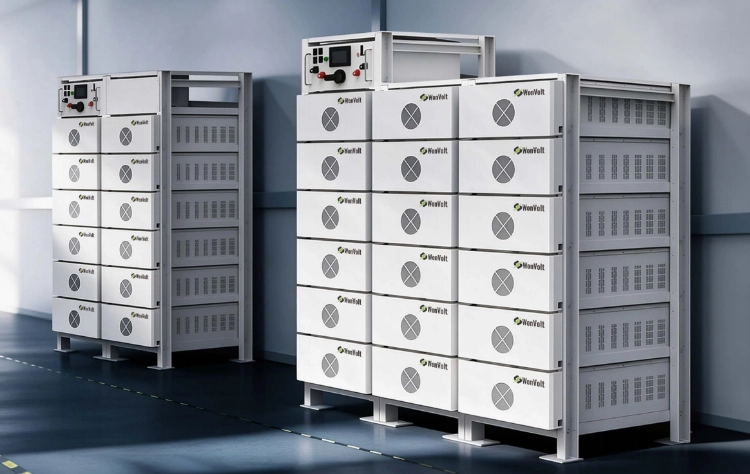
WonVolt describes its 100–261 kWh battery cluster as an air-cooled LiFePO4 solution. The published information cites more than 6,000 cycles at 25°C and 80% DoD, along with a nominal voltage figure of 51.2 V. It also mentions 1000 V and 1500 V systems. These values should not be treated as interchangeable: a module voltage is not necessarily the voltage of the assembled installation. The project engineer needs to confirm the final DC configuration, PCS voltage window, protection coordination and any site-specific derating.
Check the room, the weather and the service path
Think about maintenance before choosing where the cabinet will stand. Can the equipment be delivered to that position? Is there a sensible cable route? Will technicians be able to inspect or replace components without moving other plant? Include lifting access and emergency isolation in the layout review, not just the cabinet’s footprint.
Give suppliers real information about the proposed location, including expected high and low temperatures, humidity and any condensation risk. Mention dust, salt exposure, corrosive gases or flooding where relevant. These conditions affect the enclosure choice, cooling design and potential derating.
A spare storage room may look adequate on a drawing but fail once the manufacturer’s cooling and service clearances are included. Resolve those access issues before the battery is delivered. Extra kWh cannot make up for a cabinet that cannot be inspected or safely isolated.
Treat expansion as a design question
If future expansion is likely, raise it before buying the first unit. Ask whether additional batteries must match the original model, production batch or firmware. Also check whether the inverter, cables, protective devices and control system can accommodate the extra current and capacity.
WonVolt lists the WV51314L at 16 kWh nominal capacity and 14.4 kWh usable DC energy, with support for up to 16 units in parallel. Its 100–261 kWh cluster is also presented as expandable through parallel connection. Those published limits are useful starting points, but the supplier should document how expansion would work in the proposed installation.
A quick procurement check
Use the following checklist to compare quotations on equal terms. If a supplier has not provided evidence for an item, leave it marked as outstanding rather than assuming it is included.
| Decision item | What to verify |
| Energy | Nominal kWh, usable kWh, DoD and efficiency conditions |
| Power | Continuous output, surge output and duration, current, PCS rating |
| Compatibility | Voltage window, protocol, approved inverter list and firmware |
| Life | Cycle-test conditions, calendar-life statement and warranty limits |
| Safety | BMS protections, certificates, enclosure and installation requirements |
| Environment | Temperature, humidity, IP rating, cooling and derating |
| Expansion | Parallel limit, cables, protections and software restrictions |
| Service | Commissioning, remote support, spares, training and response process |
A lower quoted price is not necessarily a lower project cost. For example, commissioning, installation work and ongoing service may be included in one offer but excluded from another. Align the scope of supply before comparing the final amounts.
Home and commercial priorities are not the same
For residential buyers, the main concerns are often which circuits stay powered, the available installation space, noise and ease of monitoring. WonVolt presents home solutions for on-grid, off-grid and hybrid applications, including a 16 kWh low-voltage battery. Whether that product is suitable depends on the household’s measured loads and backup goals.
Commercial projects usually demand a closer look at peak-load schedules, power quality, thermal management and service access. WonVolt’s 100–261 kWh battery cluster and 100 kW–1 MW bidirectional PCS show why a capacity figure alone is not enough. The battery, power-conversion equipment and energy-management controls must be designed as one site-specific system.
Frequently asked questions
How many kWh does a home battery need?
There is no single battery size that suits every household. List the circuits that need backup and how long they must run. Supplying an entire home is a different task from keeping just essential loads online. Calculate the required energy using the selected equipment’s DoD, conversion losses, temperature allowance and reserve.
Is a higher-voltage battery always better?
At the same power level, a higher battery voltage can reduce current. That can be beneficial, but only when the rest of the design supports it. The inverter must accept the battery voltage range, and the protection, installation and service arrangements must suit the chosen system.
What should a supplier confirm before ordering?
Ask the supplier to confirm the exact battery and inverter combination in writing before placing the order. Keep that confirmation with the relevant datasheets and installation manuals. The document package should also explain usable capacity, output limits, cycle-testing conditions, warranty terms, protective functions and communications, so the complete configuration can be reviewed.