



A 100 kW / 200kWh hybrid solar power system is a power-and-energy envelope, not a ready-made operating plan. Two factories can install the same ratings and get very different results because their critical loads, peak-demand windows, solar production, outage risk, and charging opportunities are different. Load segmentation is the step that gives the nameplate meaning. By separating critical, flexible, and excluded loads, the designer can decide how much PCS output is needed at one moment, how much battery energy must be reserved, and when solar generation should serve loads or recharge storage.
For commercial sites considering a combined solar and storage package, WonVolt can be evaluated from interval load data, protected-load priorities, solar resource and array plan, tariff windows, outage history, and the site’s electrical single-line diagram.
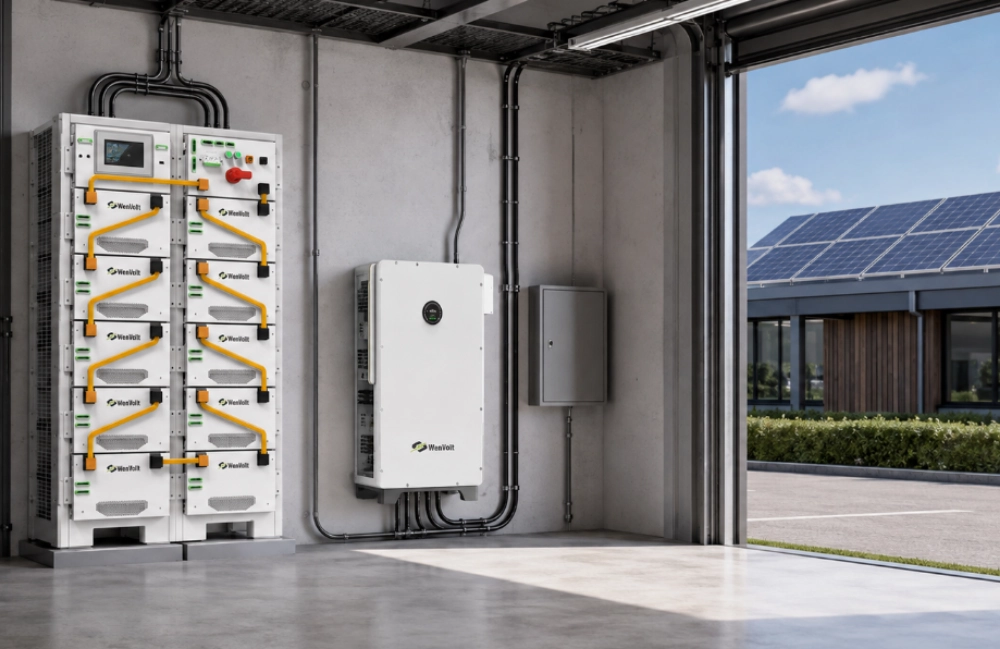
Why the Same Nameplate Can Serve Very Different Sites
- The 100kW/200kWh headline only becomes meaningful after the load curve is divided into critical, flexible, and excluded loads.
- Solar input, PCS output, battery reserve, and operating schedule must be checked together.
- A quotation based on monthly electricity use alone often misses surge loads and backup priorities.
The Same System Can Behave Differently in Two Factories
A 100kW 200kWh hybrid solar power system may support peak shaving in one site and backup reserve in another. The difference is not only hardware; it is the pattern of loads, solar generation, tariff windows, outage risk, and operating discipline. A factory with continuous motors needs a different review from a warehouse with daytime lighting and charging loads.
Before equipment is selected, the load should be divided into critical loads that must stay online, flexible loads that can be shifted, and excluded loads that should not drain the battery during an outage. This list gives the system a practical operating target.
PCS Output and Battery Energy Answer Different Questions
PCS output describes how much power the system can deliver at one moment. Battery capacity describes how long energy can continue flowing. A site may have enough kWh but not enough instantaneous output, or enough kW but too little duration. Both problems are common when sizing is based on one number.
Daily cycling strategy directly affects project value. The relationship between battery bank lifespan and discharge control is why depth of discharge, current, reserve SOC, temperature, and operating schedule should be included in the quotation assumptions rather than decided after installation.
Solar Generation Needs a Use Case, Not Just a Panel Count
Solar panels may charge the battery, serve daytime loads, or reduce grid purchase directly. The best operating logic depends on whether the site values backup reserve, tariff arbitrage, self-consumption, or carbon-reduction reporting. If these goals are not ranked, the system may work technically but fail commercially.
A useful early study compares sunny-day, cloudy-day, and outage-day behavior. The battery should not be judged only on perfect solar conditions.
Load Segmentation Table
| Load Group | Typical Examples | ESS Design Implication |
| Critical | Controllers, lighting, network, safety systems | Reserve capacity and stable transfer priority |
| Production | Motors, compressors, process equipment | Surge current and restart sequencing |
| Flexible | Charging, pumping, non-urgent HVAC | Scheduled operation during solar or low-tariff windows |
| Excluded | High heat loads or non-essential peaks | Prevents unnecessary battery drain |
Product Fit for Medium Industrial Sites
The 100kW 200kWh Hybrid Solar Power System can fit medium commercial or industrial sites when its PCS output and usable energy match the measured duty;WonVolt should then be compared on integration, controls, monitoring, protection, and the site’s expected solar/storage dispatch logic.
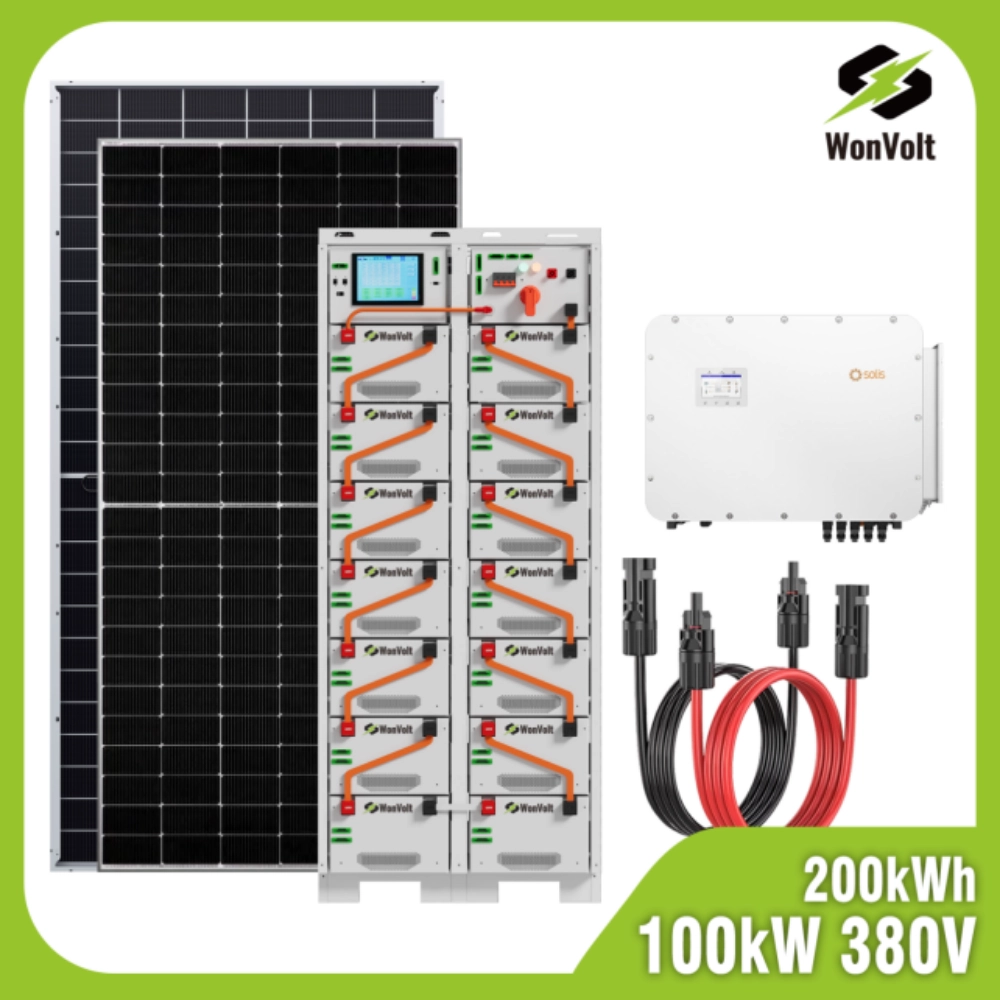
A serious inquiry should include monthly bills, 15-minute load data if available, equipment list, outage history, roof or land space, and any generator interface requirement.
Quotation Mistakes That Create Later Disputes
One mistake is asking for a system price before defining the operating target. Another is assuming the battery will cover every load without separating critical and non-critical circuits. A third is ignoring local installation conditions such as heat, dust, electrical room access, and communication requirements.
A better quotation request describes what the system must do on a normal day, a peak-demand day, and an outage day. That turns a product request into a design conversation with fewer surprises.
Field Verification Before Purchase
Break the facility demand into critical, flexible, and excluded loads before assigning the 100 kW PCS and 200 kWh battery to any operating goal. This shows whether the limiting factor is instantaneous power, backup duration, or the amount of energy available for daily peak shaving.
Use interval load data together with the equipment schedule, outage history, planned PV size, tariff windows, and generator information. Monthly consumption alone cannot show the short peaks or evening loads that often decide whether a 200 kWh battery is enough.
The pre-quotation model should include at least one normal solar day, one cloudy high-demand day, and one outage case. For each case, record battery SOC, PCS power, PV contribution, grid import, and the reserve left at the end of the event.
Questions That Make the Specification More Useful
Which loads are critical enough to remain connected when the grid fails, and what is their combined starting and running power?
How much SOC must stay reserved for backup after the battery has already participated in peak shaving?
When do the site’s demand peaks occur relative to solar production and the available charging window?
Will the system coordinate with an existing generator, PV inverter, building EMS, or utility demand-control signal?
Operating Checks for 100kW 200kWh Hybrid Solar Power System
Normal operation should be written as a dispatch priority, not left to a generic default. Define when PV serves the load, when surplus PV charges the battery, when the battery discharges for demand control, and the SOC floor that protects backup capability.
Check the electrical single-line diagram for PCS connection point, breaker ratings, transformer capacity, metering, grounding, and generator interaction. These details determine whether the rated 100 kW can actually be used at the intended point in the facility.
Reserve SOC is a business choice with a measurable trade-off. More reserve improves outage coverage but leaves less energy for tariff or demand savings; less reserve improves daily utilization but increases the chance that an evening outage finds the battery partly depleted.
Use the first weeks of operating data to tune the dispatch schedule. Compare predicted and actual solar production, peak timing, battery SOC, auxiliary consumption, and any curtailment so the control logic reflects the site’s real behavior.
Keep the assumptions with the quotation and handover file: protected-load list, tariff periods, PV priority, SOC limits, expected cycle pattern, generator logic, monitoring points, and maintenance responsibilities. This makes later optimization easier and prevents silent changes to the original design intent.
Build Three Dispatch Scenarios Before Quotation
The first scenario is an ordinary sunny working day. Map the load curve against expected solar production and decide whether PV should serve the load first, charge the battery, or do both according to a tariff or demand target. This shows how much cycling the battery will perform when there is no outage and prevents backup reserve from being consumed simply because solar energy is available.
The second scenario is a cloudy high-demand day. Solar contribution may fall while the facility still experiences the same peak. The model should show how much energy the battery can use for peak shaving without crossing the reserve SOC needed for reliability. This is often the condition that exposes an optimistic quotation based on annual solar yield rather than hour-by-hour operation.
The third scenario is a grid outage at an inconvenient time, such as late afternoon after the battery has already supported the day’s load. Apply the protected-load list and calculate the remaining backup duration. If that result is unacceptable, the design needs a different reserve rule, more energy, a generator interface, or a tighter definition of which loads stay online.
FAQ
Is 200kWh enough for factory backup?
It depends on which loads are protected and for how long. Essential control and lighting loads may run for much longer than motors, compressors, or HVAC. The protected-load list should be calculated before judging capacity.
Why does PCS rating matter in a hybrid solar system?
PCS rating limits instantaneous charge and discharge power. If the PCS is undersized, the system may have energy available but still be unable to support high momentary loads.
What should be included in a hybrid solar storage quotation request?
Include load data, roof or site conditions, desired backup time, tariff structure, grid voltage, solar capacity target, and whether generator or existing PV integration is required.
Price the System Against Three Real Dispatch Scenarios
Use the 100kw 200kwh hybrid solar power system category to compare configurations only after critical loads, peak-shaving target, backup duration, reserve SOC, PV charging priority, generator interface, and site installation limits are fixed.